The northern Italian city of Como is located at the southern end of Lake Como and is only about 50 kilometers north of the Lombard metropolis of Milan. Como is right on the border with Switzerland, adjacent to the Swiss town Chiasso. The Lago di Como is the most pristine among the northern Italian lakes and is considered sophisticated and noble. Nestled in a fascinating mountain landscape and surrounded by small villages with villas and parks makes a visit to the Como region an unforgettable experience; and maybe you are lucky and meet George Clooney in one of the many coffee bars in Como 🙂 The Hollywood star namely lingers regularly in the summer months on Lake Como in his villa, only 15 minutes by car from the city of Como.
This year, my visit to the city of Como was for the Silk Museum of Como. This unique museum is dedicated to the history and the entire process of silk production, from the breeding of silkworms to the processing and finishing of silk. The city of Como was already known in the 17th century for its silk fabrics and was considered in the 19th century as the metropolis of the European silk industry.
By the way, did you know that in just three days a single silkworm spins a continuous thread of up to 1500 meters for its cocoon, or that its weight increases 9000 times in its short and frivolous life of 30 days? The worm is hungry and picky, because they only food it eats are fresh and dry leaves of the mulberry tree 🙂
Silk Cocoons
Die norditalienische Stadt Como liegt am südlichen Ende des Comer Sees ca. 50 Kilometer nördlich der lombardischen Metropole Mailand.
Como liegt direkt an der Grenze zur Schweiz und grenzt an die Schweizer Stadt Chiasso. Der Lago di Como ist der ursprünglichste unter den oberitalienischen Seen und gilt als mondän und edel. Eingebettet in eine faszinierende Bergwelt und umsäumt von kleinen Ortschaften mit Villen und Parks macht einen Besuch der Region Como zum unvergesslichen Erlebnis und vielleicht hast Du Glück und triffst George Clooney in einer der vielen Kaffee Bars in Como 🙂 Der Hollywoodstar weilt nämlich regelmässig in den Sommermonaten am Comer See in seiner Villa, nur ca. 15 Minuten von der Stadt Como entfernt.
Silk Museum in Como
Mein diesjähriger Besuch der Stadt Como galt dem Seidenmuseum von Como. Dieses einzigartige Museum widmet sich der Geschichte und dem kompletten Ablauf der Seidenproduktion, angefangen mit der Zucht von Seidenraupen bis zur Verarbeitung und Veredelung der Seide. Die Stadt Como war bereits im 17. Jahrhundert bekannt für ihre Seidenstoffe und galt im 19. Jahrhundert als die Metropole der europäischen Seidenindustrie.
Übrigens, hast Du gewusst, dass eine einzige Seidenraupe in nur drei Tagen für ihren Cocoon einen ununterbrochenen Faden von bis zu 1500 Metern spinnt, oder dass sich ihr Gewicht in ihrem kurzen und gefrässigen Leben von 30 Tagen um das 9000-fache vergrössert? Das Würmchen ist hungrig und wählerisch, denn sie fressen nur frische und trockene Blätter des Maulbeerbaums 🙂
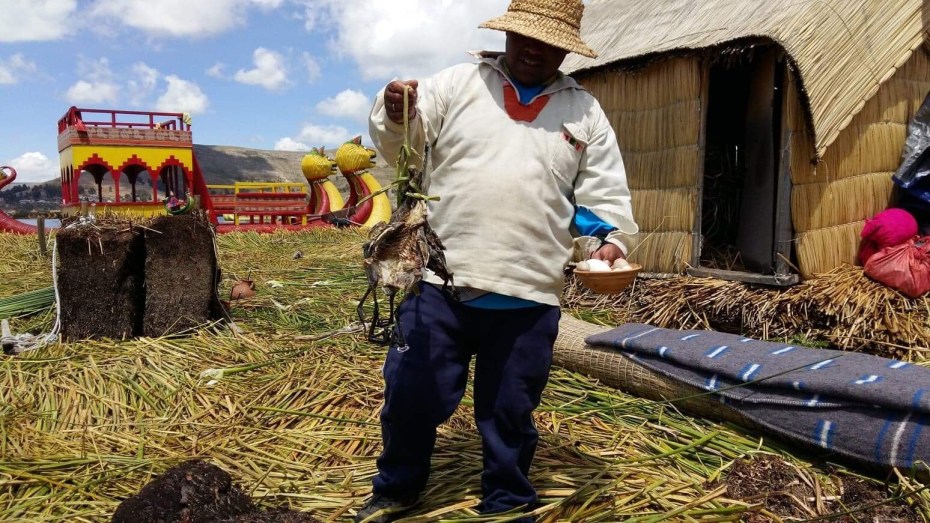
The Uros are an ethnic group of Indians on the Lake Titikaka (3840 meters above sea level) near Puno in Peru, there are still a couple of thousand people of this ethnic group living today in said area. The original language of the Uros is Urukilla. In the colonial era, they converted to Aymara, which is spoken here to the present day. The Uros live for many hundreds of years on approximately 50 “floating islands”, which are constructed from dried Totora reeds. The same plant is also the raw material for reed boats and their houses on the islands.
The Uros mainly live from fishing, bird hunting and collecting bird eggs. Today, of course, the income of day tourists are of central importance. This has brought the archipelago some modern conveniences, including solar panels, television, radio and mobile phones.
The islands, now populated by a few hundred Uros, are located 6 km east of the port of Puno. The majority of Uros now lives and works on the mainland and students are learning at the the university in Puno.
The day trips depart from the port of Puno and the crossing to the floating Uros Islands takes about 30 minutes. You will travel by boat through a natural “channel” cut out of a dense reef field to one of these islands, where you will meet the resident families, explore their surroundings and get to know their way of life; of course you can take a lot of photos! The women of the visited islands weave, sew and carve small souvenirs which you can buy for little money. You also have the option to visit a neighboring island with a reed boat (the transfer will be paid directly to the family that owns the boat).
The best way to visit the Uros is to arrive in Puno at least one day before and stay overnight. Hotels can be booked directly via this LINK.
Uros on lake Titikaka
Uros on lake Titikaka
Die Uros auf dem Titikaka See
Die Uros sind eine ethnische Gruppe von Indianern am Titikaka-See (3840 Meter über dem Meeresspiegel) in der Nähe von Puno in Peru; es leben immer noch ein paar tausend Menschen dieser ethnischen Gruppe in diesem Gebiet. Die ursprüngliche Sprache der Uros ist Urukilla. In der Kolonialzeit wechselten sie mit der Zeit zu Aymara das hier bis heute gesprochen wird. Die Uros leben seit vielen hundert Jahren auf diesen „schwimmenden Inseln”, die aus getrockneten Totora-Schilfen bestehen. Die gleiche Pflanze ist auch der Rohstoff für Ihre Schilfboote und Häuser auf den gegenwärtig ca. 50 Inseln.
Die Uros leben hauptsächlich vom Fischfang, der Vogeljagd und dem Sammeln von Vogeleiern. Heute ist natürlich das Einkommen der Tagestouristen von zentraler Bedeutung. Dies hat dem Archipel moderne Annehmlichkeiten gebracht wie Sonnenkollektoren, Fernsehen und Radio, etc.
Die Inseln, die heute von einigen hundert Uros bevölkert sind, liegen 6 km östlich des Hafens von Puno. Die Mehrheit der Uros lebt und arbeitet auf dem Festland und die Studenten lernen an der Universität in Puno.
Die Tagesausflüge beginnen am Hafen von Puno und die Überfahrt zu den schwimmenden Uros-Inseln dauert etwa 30 Minuten. Sie werden mit dem Boot durch einen natürlichen “Kanal” fahren, der aus einem dichten Schilffeld herausgeschnitten wurde um zu einer dieser Inseln zu gelangen, wo Sie die ansässigen Familien treffen, ihre Umgebung erkunden und ihre Lebensweise kennenlernen werden; natürlich können Sie viele Fotos machen! Die Frauen der besuchten Inseln weben, nähen und schnitzen kleine Souvenirs, die man für wenig Geld kaufen kann. Sie haben auch die Möglichkeit, eine Nachbarinsel mit einem Schilfboot zu besuchen (der Transfer wird direkt an die Familie gezahlt, die das Boot besitzt).
Die beste Art, die Uros zu besuchen ist mindestens einen Tag vorher in Puno anzukommen und dort zu übernachten. Hotels können direkt über diesen LINK gebucht werden.
Buddhist Pilgrimage Tour in Nepal is so famous Package tour because Nepal is a birth place of lord Buddh whose philosophy is the root of Budhhism in the world. Nepal is nest of various religions and cultural ethnic group. Whole of them Buddhist people are in second position in population of Nepal. Nepal has many […]
Who does not know him, Freddie Mercury, the lead singer of the Rockband „Queen“ who unfortunately died too early. In 1996, in memory of his presence in Montreux, Switzerland, a statue on the lake promenade of Lake Geneva was erected. In 1978, the singer came to the Montreux Jazz Festival with his unmistakable voice to record the album Jazz with Queen. At that time, the Montreux Casino’s “Mountain Studio” was one of the world’s most advanced recording studios equipped with Revox machines. The following year, Freddie Mercury bought the Mountain Studio, which today is open to the public. It is now a Museum and visiting this historic place in Montreux is worthwhile!
Freddie Mercury
Wer kennt ihn nicht, Freddie Mercury, der Lead Sänger der Rockband „Queen“, der leider viel zu früh verstorben ist. Zur Erinnerung an seine Anwesenheit in Montreux (Schweiz) wurde 1996 eine Statue an der Seepromenade des Genfersees aufgestellt. 1978 kam der Sänger mit seiner unverkennbaren Stimme zum Montreux Jazz Festival, um das Album Jazz mit Queen aufzunehmen. Das „Mountain Studio“ im Casino von Montreux war zu jener Zeit weltweit eines der hochmodernsten, mit Revox-Geräten ausgerüstete, Tonstudio. Im folgenden Jahr kaufte sich Freddie Mercury das Mountain Studio; es ist heute für die Oeffentlichkeit zugängig. Es wurde in ein Museum umfunktioniert und ein Besuch dieses historischen Ortes in Montreux lohnt sich!
The Colca Canyon is a gorge near Chivay in Peru, 97 km north of Arequipa. Here, the river Colca has dug into the earth and thus created the Colca Gorge. The Colca Canyon is, depending on the measurement and compared to the Grand Canyon, the second deepest or deepest canyon in the world.
Our one-day Colca Tour started in Arequipa. The adventure began at 4 o’clock in the morning. We were a group of ten courageous early risers who were forced into an aged minibus.
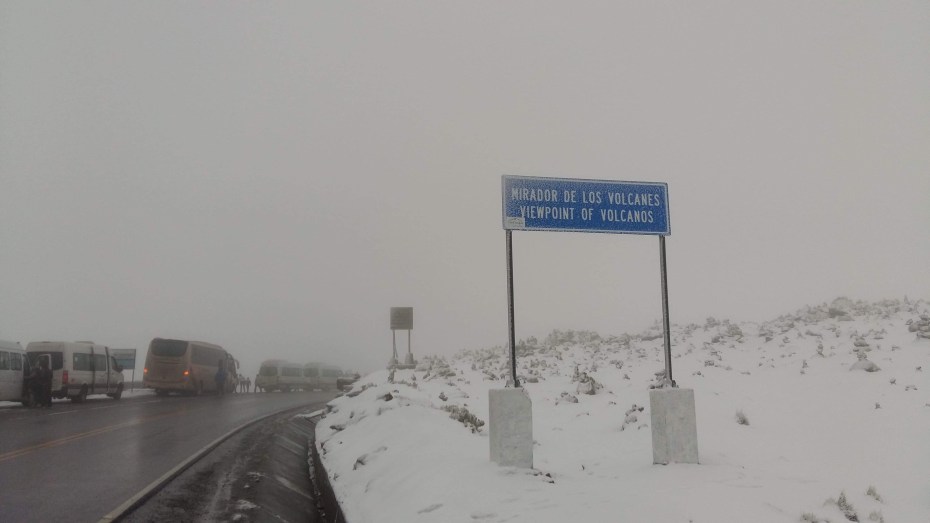
The Bus bus rattled slowly through the still dark landscape, and one could feel how the vehicle laboriously but steadily worked upwards. The exhaust fumes of the vehicle and the ever-increasing altitude drove most of us cold sweat into the face, some participants wanted to leave the vehicle at this Point to regenerate in the fresh air and fill their lungs with oxygen. This was granted to us after a three-hour ride on the highest point of the route, at 4‘890 meters on the Pata Pampa Pass. Here, the air is thin and I had shortness of breath and difficulties to get back on the bus. I was not unhappy when the ride was continued. The pass was snowy and the fog made it impossible to see the Andes and the surrounding volcanoes anyway.
Condor
We continued on a winding road in the direction of Chivay into the valley at 3’650 meters. We had a short stay there before continuing. After a curvy one-hour ride up through a breathtaking natural landscape, we reached the vantage point “Cruz del Condor” at 3’900 meters. Here, in the early morning, the kings of the skies, the famous condors, rise from the depths of the canyon. We were very fortunate that day and a condor couple sailed majestically about five meters above us. My shortness of breath and discomfort was forgotten for a while. The goal of my trip was reached at this time. The return trip was no less tedious, only side reversed 🙂 On the following day, the flight from Arequipa to Cusco brought me a brief relief. But after arriving in Cusco, the malaise was back. Heavy dizziness, rapid heartbeat and an extremely high blood pressure made it impossible for me to travel on. After two days of hospitalization and a rest of few days in the Inca city, significantly improved my situation and I was “allowed” to continue the Andean journey.
Cruz del Condor – Colca Canyon Peru
What I knew about the altitude sickness before my trip to the Andes
I was aware that altitude sickness can occur when the body does not have enough time to adapt to the new conditions. Therefore, I planned the journey to commence in Arequipa, on an altitude of 2’400 meters, to adapt myself successively to the changed height conditions. But the climb to nearly 5’000 meters was too abrupt and the phase of acclimatization of only two days in Arequipa was obviously too short for me!
What I didn’t know
The altitude sickness can be life-threatening and can cause particularly serious problems for the lungs and brain. Brain or pulmonary edema could develop with fatal consequences.
What should I have done right in my case?
The only effective protection against altitude sickness is the right approach to ascension. When climbing dizzying heights, do not go too fast to give the body the time to adapt to the changing conditions. That was not the case with me! Per day, not more than 300 to 500 meters of altitude should be overcome. At sighted heights of more than 4’000 meters, it is recommended to spend some time at an altitude of 3’000 meters before continuing on. If symptoms occur, it is advisable to start the descent immediately. In any case, a medical consultation before the start of a “risk trip” like mine is very advisable.
Der Colca Canyon ist eine Schlucht in der Nähe von Chivay in Peru, 97 km nördlich von Arequipa. Hier hat sich der Fluss Colca in die Erde eingegraben und so die Colca-Schlucht geschaffen. Der Colca Canyon ist, je nach Vermessung und Vergleich mit dem Grand Canyon, der zweittiefste oder tiefste Canyon der Welt.
Unsere eintägige Colca Tour begann in Arequipa. Das Abenteuer begann um 4 Uhr morgens. Wir waren eine Gruppe von zehn mutigen Frühaufstehern, die in einen alten Kleinbus gezwungen wurden.
Langsam ratterte der Bus durch die noch dunkle Landschaft, und man konnte fühlen, wie das Fahrzeug sich mühsam aber stetig nach oben arbeitete. Die Abgase des Fahrzeugs und die immer größer werdende Höhe trieb die meisten von uns kalten Schweiß ins Gesicht, einige Teilnehmer wollten das Fahrzeug zu diesem Zeitpunkt verlassen, um sich an der frischen Luft zu regenerieren und die Lungen mit Sauerstoff zu füllen. Dies wurde uns nach einer dreistündigen Fahrt auf dem höchsten Punkt der Route auf 4’890 Metern am Pata Pampa Pass gewährt. Hier ist die Luft dünn und ich litt unter Kurzatmigkeit und hatte Schwierigkeiten wieder in den Bus zu steigen. Ich war nicht unglücklich, als die Fahrt fortgesetzt wurde. Der Pass war verschneit und der Nebel machte es unmöglich, die Anden und die umliegenden Vulkane zu sehen.
Der Bus fuhr auf einer kurvenreichen Straße in Richtung Chivay ins Tal auf 3’650 Meter. Dort hatten wir einen kurzen Aufenthalt bevor es weiter ging. Nach einer kurvenreichen einstündigen Fahrt durch eine atemberaubende Naturlandschaft erreichten wir den Aussichtspunkt “Cruz del Condor” auf 3’900 Meter. Hier, am frühen Morgen, erheben sich die Könige der Lüfte, die berühmten Kondore, aus den Tiefen des Canyons. Wir hatten sehr viel Glück an diesem Tag und ein Kondorpaar segelte majestätisch etwa fünf Meter über uns hinweg. Meine Atemnot und mein Unbehagen waren für eine Weile vergessen. Das Ziel meiner Reise war zu dieser Zeit erreicht. Die Rückfahrt war nicht weniger mühsam, nur umgekehrt 🙂 Am nächsten Tag brachte mir der Flug von Arequipa nach Cusco eine kleine Erleichterung. Aber nach der Ankunft in Cusco war das Unwohlsein zurück. Schwerer Schwindel, schneller Herzschlag und ein extrem hoher Blutdruck machten es mir unmöglich weiter zu reisen. Nach zwei Tagen Krankenhausaufenthalt und einer Pause von einigen Tagen in der Inka-Stadt verbesserte sich meine Situation erheblich und ich „durfte“ die Andenreise fortsetzen.
Pata Pampa Pass in Peru on 4‘890 meters
Was ich über die Höhenkrankheit vor meiner Reise in die Anden wusste
Mir war bewusst, dass Höhenkrankheit auftreten kann, wenn der Körper nicht genügend Zeit hat, sich an die neuen Bedingungen anzupassen. Daher plante ich die Reise in Arequipa, auf einer Höhe von 2’400 Meter, um mich den veränderten Höhenverhältnissen anzupassen. Aber der Aufstieg auf beinahe 5‘000 Meter war zu abrupt und die Phase der Akklimatisierung von nur zwei Tagen in Arequipa war offensichtlich zu kurz für mich!
Was ich nicht wusste
Die Höhenkrankheit kann lebensbedrohlich sein und besonders schwerwiegende Probleme für Lunge und Gehirn verursachen. Hirn- oder Lungenödeme können sich mit fatalen Folgen entwickeln.
Was hätte ich in meinem Fall tun sollen?
Der einzige wirksame Schutz gegen Höhenkrankheit ist das richtige Vorgehen beim Aufstieg. Wenn man in schwindelerregende Höhen steigt, sollte man nicht zu schnell steigen, um dem Körper die Zeit zu geben, sich den wechselnden Bedingungen anzupassen. Das war bei mir nicht der Fall! Pro Tag sollten nicht mehr als 300 bis 500 Höhenmeter überwunden werden. Auf einer anvisierten Höhe von mehr als 4’000 Meter empfiehlt es sich, einige Zeit auf einer Höhe von 3’000 Meter zu verbringen bevor man weitermacht. Wenn Symptome auftreten, ist es ratsam, den Abstieg sofort zu beginnen. In jedem Fall ist eine ärztliche Beratung vor Beginn einer “Risiko-Reise” wie der meinen sehr zu empfehlen.
The Museo Larco should definitely be on the “to do” list when visiting Lima. It is located about 20 minutes from the historic center of Lima in the Pueblo Libre district. The white building was built in the typical architecture of the 18th century of the town Trujillo. Originally founded in Trujillo, the museum was relocated to Lima some 50 years ago. The museum’s permanent exhibition offers visitors a superb perspective on more than 5,000 years of ancient Peruvian history. Also very interesting are the storage rooms with tens of thousands of antique ceramic objects that are made accessible to the public. A little further away from the main museum are exhibited erotic artworks that give visitors a picture of the Peruvian sexuality of that time. You will find the “erotic rooms”, a bit hidden, on the way to the restaurant. All in all, the Museo Larco is one of the best and most beautiful museums I have visited in South America. Detailed information can be found on the following website: http://www.museolarco.org
Museo Larco in Lima
Das Museo Larco sollte auf jeden Fall auf der „to do“ Liste sein, wenn man Lima besucht. Es liegt etwa 20 Minuten vom historischen Zentrum von Lima im Stadtteil Pueblo Libre entfernt. Das weiße Gebäude wurde in der typischen Architektur der Stadt Trujillo aus dem 18. Jahrhundert erbaut. Ursprünglich gegründet in Trujillo wurde das Museum vor etwa 50 Jahren nach Lima verlegt. Die Dauerausstellung des Museums bietet den Besuchern eine hervorragende Perspektive auf mehr als 5000 Jahre antiker peruanischer Geschichte. Auch sehr interessant sind die Lagerräume mit Zehntausenden von antiken keramischen Gegenständen die der Öffentlichkeit zugänglich gemachte werden. Ein wenig abseits des Hauptmuseums werden erotische Kunstwerke ausgestellt die den Besuchern ein Bild der peruanische Sexualität jener Zeit vermittelt. Sie werden die „Erotik Zimmer“, ein wenig versteckt, auf dem Weg zum Restaurant finden. Alles in allem ist das Museo Larco eines der besten und schönsten Museen die ich in Südamerika besucht habe. Detaillierte Informationen finden Sie auf folgender Website: http://www.museolarco.org
Bulgaria Wine Tours organizes full-service wine tours to Bulgaria but there is much more to it than simply tasting wines. The tours combine wine tastings and winery visits with the cultural heritage, history, cuisine and nature of Bulgaria. They like to call themselves a tour operator that focuses on wine & food tourism with a touch of cultural and rural tourism. You do not have to be a wine connoisseur to enjoy their tours. Bulgaria Wine Tours are enjoyable and accessible to anyone who prefers vacations with a heavy focus on wine, food and culture. For those who are wine connoisseurs or would like to organize a tour for a wine club or a group of wine professionals, they take great pride on offering special interest tours that focus exclusively on wine and food. Get in touch for a customized tour itinerary that fits all of your needs.
Bulgaria Wine Tours offers guided private or group tours in Bulgaria’s wine regions.
Post written in co-operation with Bulgaria Wine Tours
Bulgarian Wine Tours
Bulgarian Wine Tours
Bei Bulgarian Wine Tours organisieren wir Full-Service-Wein-Touren nach Bulgarien, aber es gibt viel mehr als nur Weine zu probieren. Die Touren verbinden Weinproben und Weingüterbesuche mit dem kulturellen Erbe, Geschichte, Küche und der Natur Bulgariens. Sie nennen uns gerne einen Reiseveranstalter, der sich auf den Wein- und Lebensmittel-Tourismus mit einem Hauch von Kultur- und Landtourismus konzentriert. Sie müssen kein Weinkenner sein, um die Touren von Bulgarian Wine Tours zu genießen. Die Touren sind angenehm und zugänglich für jeden, der Urlaub mit einem starken Fokus auf Wein, Essen und Kultur bevorzugt. Für diejenigen, die Weinkenner sind oder eine Tour für einen Weinclub oder eine Gruppe von Weinprofis organisieren möchten, ist Bulgaria Wine Tours gerne bereit, spezielle Interessen-Touren anzubieten, die sich ausschließlich auf Wein und Essen konzentrieren. Kontaktieren Sie Bulgaria Wine Tours für eine maßgeschneiderte Reiseroute, die all Ihren Bedürfnissen entspricht.
Bulgarian Wine Tours bietet geführte private oder Gruppenreisen in Bulgariens Weinregionen an.
A trip on the luxury train from Cusco, the former capital of the Inca Empire, through the Andes to Puno on Lake Titicaca is one of the many unforgettable experiences of my journey through Peru and Bolivia. Who decides to take this train and goes on board in Cusco wishes that time may stand still and that the journey never ends. From Cusco to Puno, the train journey took one day and one night. The Belmond train rolls at a maximum speed of 50 kilometers per hour leisurely through the sparsely populated Andes. The monoton rattling of the wheels on the rails and the soft rocking of the wagons is incredibly reassuring. Particularly impressive on this trip were the 700-year-old temple ruins of Raqchi and the countless alpacas and vicunias along the railway through this breathtaking Andean plateau. The following day, the Andean Explorer tackles the second part of his trip to Arequipa. For me, the trip was unfortunately at the legendary Lake Titicaca already over; from Puno I continued my journey by car to La Paz in Bolivia.
This train ride was however somehow surreal given the poverty of the people we passed along the railroad tracks and who waved us whilst sipping our champagne in a luxurious ambiance. Belmond offers a lot to it’s guests on this journey, short sightseeing trips, excellent food and service, live music and personal sleeping compartments that do not have to shy away from a comparison with rooms of a luxury hotel. In summary, this train ride was a unique and unforgettable experience!
Eine Fahrt mit dem Luxuszug von Cusco, der ehemaligen Hauptstadt des Inkareichs, durch die Anden nach Puno am Titicacasee zählt zu den vielen unvergesslichen Erlebnissen meiner Reise durch Peru und Bolivien. Wer diese Reiseroute wählt und in Cusco an Bord geht, der wünscht sich, die Zeit möge still stehen und die Fahrt niemals enden. Von Cusco bis nach Puno dauerte die Zugfahrt einen Tag und eine Nacht. Der Belmond-Zug rollt mit maximal 48 Stundenkilometern gemächlich durch die dünn besiedelten Anden. Das leise Rattern der Räder auf den Schienen und das sanfte Schaukeln der Waggons wirkt unheimlich beruhigend. Besonders beeindruckend auf dieser Reise waren die 700 Jahre alten Tempelruinen von Raqchi und die unzähligen Alpacas und Vicunias entlang der Bahnstrecke durch diese atemberaubende Hochebene der Anden. Am darauf folgenden Tag nimmt der Andean Explorer den zweiten Teil seiner Reise nach Arequipa in Angriff. Für mich war die Reise leider am sagenumwobenen Titicacasee schon zu Ende; von Puno aus ging es für mich dann mit dem Auto weiter nach La Paz in Bolivien.
Diese Zugfahrt war jedoch angesichts der Armut der Menschen, die wir entlang der Gleise passierten und die uns am Champagner Glas nippend im luxuriösen Barwagen zuwinkten, irgendwie unwirklich. Belmond bietet seinen Gästen auf dieser Reise viel, kurze Sightseeing-Touren, ausgezeichnetes Essen und Service, Live-Musik und persönliche Schlafabteile, die den Vergleich mit Zimmern eines Luxushotels nicht scheuen müssen. Zusammenfassend war diese Zugreise eine einzigartige und unvergessliche Erfahrung!
The depicted canon is a RML 10-inch rifled muzzle loading gun in front of the South Bastion in Gibraltar. Such guns were used for British battle ships and fixed coastal defense systems around the British Empire in the second half of the 19th century.
The gun shown is located in the city center of Gibraltar. You would find it on the way to the cable car station and only a few steps away from the Trafalgar Cemetery. Many of the buried in this cemetery were killed in sea battles, two of which in the battle of Trafalgar in 1805.
RML 10-inch rifled muzzle loading gun
Bei der abgebildeten Waffe handelt es sich um eine 10-Zoll-Kanone mit gezogenem Lauf, sie befindet sich vor der Süd Bastion in Gibraltar. Solche Geschütze wurden im Britischen Empire während der zweiten Hälfte des 19. Jahrhunderts auf Schlachtschiffen und auf Festungen der Küstenabwehr eingesetzt.
Trafalgar Cemetery
Diese Kanone befindet sich im Stadtzentrum von Gibraltar auf dem Weg zur Seilbahnstation und ist nur wenige Schritte vom Trafalgar Friedhof entfernt. Viele der auf diesem Friedhof begrabenen wurden in Seeschlachten getötet, zwei davon in der Schlacht von Trafalgar im Jahr 1805.
Roland, a modern Don Quijote and Pilgrim from Hungary and his donkey Rosinante are an inseparable couple (aka Rolandante) living and walking on the Camino. Last year, on my way to Santiago de Compostela, there was this donkey in the middle of nowhere, tied up next to the Camino trail, it was Rosinante! I assume that the pilgrim Roland was still sleeping in his blue tent under an old eucalyptus tree which was only a few footsteps away.
However, Rosinante was awake and already active, she had her own pilgrim stamp or (sello). If you want to receive your Compostela, the religious document that certifies your pilgrimage, you need to show to the Pilgrims Office in Santiago de Compostela a Credencial full of sellos! The Credencial is a sort of Pilgrimage Passport in which you collect stamps as you walk the Camino. Such stamps can be obtained in churches, hostels and hotels, restaurants, bars and also from the donkey Rosinante 🙂 This is a nice keepsake, but it’s also a necessary document to carry. The very first thing you will have to do upon checking in to any hostel is present your actual Identification Card and your Credencial to verify that you are walking the Camino. It is not only required for your accommodation, the document is also required as a proof in Restaurants to get the inexpensive three course pilgrimage menu with a bottle of wine 🙂 🙂 Buen Camino!
Roland, ein moderner Don Quijote und Pilger aus Ungarn und sein Esel Rosinante sind ein untrennbares Paar (auch bekannt als Rolandante) auf ihrer langjährigen Pilgerreise. Letztes Jahr, auf meinem Weg nach Santiago de Compostela, stand da ein Esel mitten im Nirgendwo neben dem Camino Trail, es war Rosinante! Den Pilger Roland habe ich nicht angetroffen, wahrscheinlich war er noch in seinem blauen Zelt unter einem alten Eukalyptusbaum nur einige Schritte von Rosinante entfernt am schlafen.
Rosinante war aber schon wach und bereits aktiv, sie hatte vor sich auf einem kleinen Tischlein ihren eigenen Pilgerstempel oder (sello). Wenn Du den Compostela erhalten möchtest, das ist das religiöse Zertifikat welches deine Pilgerreise bestätigt, musst Du dem Pilgeramt in Santiago de Compostela ein Dokument voller „sellos“ zeigen! Das Dokument ist eine Art Pilgerpass, in dem Du auf deinem Camino die Stempel sammelst. Solche Stempel sind in Kirchen, Pilgerherbergen und Hotels, Restaurants, Bars und auch beim Esel Rosinante erhältlich 🙂 Die vielen Stempel sind ein schönes Andenken, aber auch ein notwendiges Dokument. Das allererste was Du beim Einchecken in eine Herberge tun musst, ist deinen Personalausweis und den Pilgerpass vorlegen um zu beweisen, dass Du auch tatsächlich den Camino gehst. Dieses Dokument ist nicht nur auf der Suche nach einer Unterkunft erforderlich, der Pilgerpass wird auch als Nachweis in Restaurants benötigt um das preisgünstige dreigängige Pilgermenü mit einer Flasche Wein zu erhalten 🙂 🙂 Buen Camino!
If you liked Florence and you want to make sure that you return to this beautiful city one day, then you should go to the Mercato Nuovo! It is a covered market in the historic center of Florence, near the Palazzo Vecchio. The biggest attraction of this market are not the stalls of the textile and leather goods retailers, but the “Fontana del Porcellino” (Piglet Fountain). It is a small fountain with a bronze statue, not of a piglet, but of a full-grown boar from the 17th century. The legend says, that the one who rubs the shining snout of the boar and puts a coin in his mouth at the same time will have luck and return to Florence. But beware, the process is only successful if the coin falls into the well water which is protected with a small gatter! To make sure you have luck and return to Florence one day, you should rub his muzzle once again, and only after the coin has fallen into the water 🙂 … it’s a precautionary measure … 🙂 I wish you good luck and a nice stay in Florence!
Fontana del Porcellino
Wenn Dir Florenz gefiel und Du sicher gehen möchtest, dass Du eines Tages in diese wunderschöne Stadt zurückkehrst, dann solltest Du zum Mercato Nuovo gehen! Es ist eine überdeckte Markthalle im historischen Zentrum von Florenz, in der Nähe des Palazzo Vecchio. Die größte Attraktion dieses Marktes sind nicht die Stände der Textil und Lederwarenhändler, sondern die “Fontana del Porcellino” (Ferkelbrunnen). Es ist ein kleiner Brunnen mit einer Bronzestatue, nicht eines Ferkels, sondern eines ausgewachsenen Wildschweins aus dem 17. Jahrhundert. Die Legende besagt, dass derjenige, der die glänzende Schnauze des Wildschweins reibt und gleichzeitig eine Münze in den Mund steckt, Glück haben wird und nach Florenz zurückkehrt. Aber Vorsicht, der Vorgang ist nur erfolgreich, wenn die Münze in das mit einem kleinen Gitter geschützte Brunnenwasser fällt! Um sicher zu gehen, dass Du auch Glück hast und eines Tages nach Florenz zurückkehrst, solltest du seine Schnauze noch einmal reiben, und zwar nachdem die Münze ins Wasser gefallen ist 🙂 … es ist nur eine Vorsichtsmaßnahme … 🙂 Ich wünsche Dir viel Glück und einen schönen Aufenthalt in Florenz!
The Gibraltar International Airport is unique in the World. The runway crosses Winston Churchill Avenue, the only road link with Spain. For pedestrians and cars there are neither over nor underpasses to cross the airfield. Actually, the road over the runway is closed, similarly to train crossings, at every take-off and landing.
The Airport’s terminal building is adjacent to Gibraltar’s land border with Spain and only a few hundred meters from Gibraltar‘s city center away with its busy shopping mile the „Main Street“.
There are weekly flights by British Airways and Easyjet to Gibraltar from London, Bristol and Manchester in the United Kingdom and one weekly flight from Tangier and Casablanca by Royal Air Maroc. Spanish airlines are not flying to Gibraltar. Malaga is the nearest international airport in Spain. From there you can take a taxi to the border crossing of Gibraltar. A cheaper option is offered by a travel company from Gibraltar which runs a shuttle bus service to and from Malaga airport twice a day.
Der Internationale Flughafen von Gibraltar ist einzigartig in der Welt. Die Landebahn kreuzt die Winston Churchill Avenue, die einzige Strassenverbindung mit Spanien. Um den Flugplatz zu überqueren gibt es weder für Fussgänger noch für Autos Über- oder Unterführungen. Die Strasse über die Landebahn wird ähnlich wie bei Bahnübergängen bei jedem Start und jeder Landung gesperrt.
Das Terminalgebäude des Flughafens grenzt an die Landesgrenze mit Spanien und ist nur wenige hundert Meter von der Innenstadt von Gibraltar mit seiner belebten Hauptstrasse der „Main Street“ entfernt.
Es bestehen wöchentliche Flugverbindungen nach Gibraltar von London, Bristol und Manchester imVereinigten Königreich mit der British Airways und mit Easyjet sowie ein wöchentlicher Flug von Tangier und Casablanca mit der Royal Air Maroc. Spanische Fluggesellschaften fliegen nicht nach Gibraltar. Malaga ist der nächst gelegene internationale Flughafen in Spanien. Von dort gelangt man über den Landweg mit einem Taxi bis zum Grenzübergang von Gibraltar. Eine günstigere Variante offeriert seit kurzem ein Reiseunternehmen aus Gibraltar welche den Flughafen in Malaga und Gibraltar mit einem Shuttle-Bus einmal morgens und abends bedient.
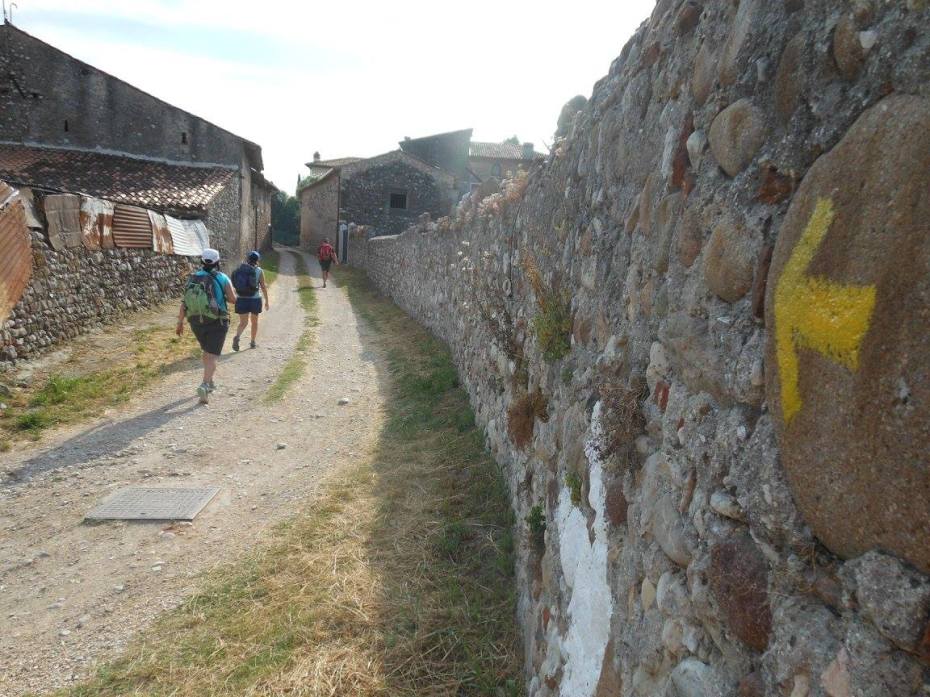
The Via Postumia was a road in Northern Italy that was built by the Romans around 150 BC; it led from Aquileia, through the Po valley over the Apennines to the city of Genoa. Today, this historic route largely forms the centerpiece of the new Italian pilgrimage route, the Via Postumia, to Santiago de Compostela in Galicia, Spain.
The Via Postumia is 930 km long and leads from Aquileia to Genoa and crosses the entire north of Italy from east to west, i.e. through the Regions Friuli-Giulia Venezia, Lombardy, Emilia Romagna, Piedmont and Liguria.
What didn’t exist until now, was an arrow-marked pilgrim route that crosses Italy from east to west and continues from Genoa to Menton in France along the Ligurian coast. The idea to develop such a route emerged at the World Meeting of the Associations of Friends of the St. James Way in Krakow in September 2013, on the occasion of the 1200th anniversary of the rediscovery of the body of St. James. Shortly after his return from this World Meeting in Poland, Andrea Vitiello began this task and decided to trace and re-enact the paths of medieval pilgrims from the East through Italy using advice and opinions from historians, other experts and friends.
The gigantic task of Andrea was to create a route that fit into the map and the network of all the St. James Ways in Europe. Another objective of his project is to promote and support the local businesses along the newly created Via Postumia pilgrimage route.
The result of this great initiative is commendable. The Way of St. James through Italy was formally restored. I am convinced that pilgrims who choose this route through Italy on their way to Santiago de Compostela will be delighted in every way! The Via Postumia crosses the wonderful landscapes of northern Italy on quiet and signposted paths, past nine UNESCO heritage sites and through some of the most beautiful cities in Italy. I am already looking forward to this historic, culinary and spiritual pilgrimage through Italy.
Further and detailed information such as maps, directions, hotels and hostels, etc. can be found under the following link: http://www.viapostumia.eu
The Via Postumia in Northern Italy
Die Via Postumia war eine um das Jahr 150 v. Chr. gebaute Römerstrasse in Italien, die von Aquileia, durch die Poebene über die Apenninen bis nach Genua führte. Dieser historische Weg bildet heute weitestgehend das Kernstück des Italienischen Pilgerwegs, die Via Postumia, nach Santiago de Compostela in Galizien, Spanien.
Dieser Weg, die Via Postumia, ist eine etwa 930 km lange Route die von Aquileia nach Genua führt und den gesamten Norden Italiens von Osten nach Westen durchquert, also Friaul-Julisch Venetien, Lombardei, Emilia Romagna, Piemont und Ligurien.
Was es bis jetzt nicht gab, war eine mit Pfeilen markierte Pilger Route die Italien von Osten nach Westen durchquert und von Genua weiter nach Menton in Frankreich entlang der ligurischen Küste führt. Die Idee einen solchen Weg zu entwickeln entstand am Welttreffen der Jakobsvereine im September 2013 in Krakau, anlässlich des 1200-jährigen Jubiläums der Wiederentdeckung des Leichnams des Heiligen Jacobus. Kurz nach seiner Rückkehr von diesem Weltmeeting in Polen begann Andrea Vitiello mit dieser Aufgabe und beschloss anhand von Ratschlägen und Meinungen von Historikern, anderen Experten und Freunden die Wege mittelalterlicher Pilger aus dem Osten durch Italien zurückzuverfolgen und nachzubilden.
Die gigantische Aufgabe von Andrea bestand darin, eine Route zu erstellen, die in die Karte und das Netzwerk aller Jakobswege von Europa passte. Ein weiteres Ziel seines Projekts ist die Förderung und Unterstützung der lokalen Unternehmen entlang der neu geschaffenen Pilgerroute Via Postumia.
Das Ergebnis dieser großartigen Initiative ist lobenswert. Der Jakobsweg durch Italien wurde formal wieder hergestellt. Ich bin überzeugt, dass Pilger, die diese Route durch Italien auf ihrem Weg nach Santiago de Compostela wählen, in jeder Hinsicht begeistert sein werden! Die Via Postumia durchquert die wundervollen Landschaften Norditaliens auf ruhigen und beschilderten Wegen, vorbei an neun UNESCO-Kulturstätten und durch einige der schönsten Städte Italiens. Ich freue mich schon jetzt auf diesen historischen, kulinarischen und spirituellen Pilgerweg durch Italien.
Weitere und detaillierte Informationen wie Karten, Wegbeschreibungen, Hotels und Herbergen, etc. findest Du unter folgendem Link: http://www.viapostumia.eu
Saint Barthélemy (or St. Barth, St. Barths, St-Barts) is a small Caribbean island in the French West Indies (FWI) with an area of approximately 25 square kilometers and about 9000 inhabitants. The capital, with its beautiful natural harbor, is Gustavia. Before the end of the Napoleonic wars, St. Barth was for a short time a Swedish colony, but later fell back to France. The language, cuisine and culture are clearly French, i.e. you will not miss the typical French croissant in St. Barth. The island is a very popular tourist destination; and especially in the wintertime the beautiful and the rich are bustling there.
The Saline – Before the time of tourism, the few islanders lived on fishing, breeding livestock, growing cotton and extracting salt. On the road to one of the most beautiful beaches on the island (saline) is an old salt marsh that was exploited until the 1970s. Today, this saline is a unique ecosystem and considered a sanctuary and breeding ground for rare freshwater and seawater birds. But in the salt marsh are still quite different beauties, there are from the salt over the decades gnawed and preserved tree trunks, trees that once here, in this place, the tired and thirsty salt pickers their shadow ghost donated.
Defibrillator in Paradise – A defibrillator or Defi is a medical device for defibrillation and possibly for cardioversion. It is a lifesaver. The Defi can end, with targeted power surges, especially cardiac arrhythmia. Defibrillators are found in intensive care units, operating rooms or emergency stations and ambulances. For a few years, these devices have also been available in public places such as airports and train stations. In emergencies, these can also be operated by laymen, which was probably also a reason, amongst other considerations, to install a Defibrillator in the Saline, one of the most beautiful beaches of St. Barth!
Defibrillator on the Beach
Saint Barthélemy (oder St. Barth, St. Barths, St-Barts) ist eine kleine Karibische Insel in den Französischen West Indies (FWI) mit einer Fläche von ca. 25 Quadratkilometern und ungefähr 9000 Einwohner. Die Hauptstadt, mit ihrem wunderschönen natürlichen Hafen, ist Gustavia. Vor dem Ende der Napoleonischen Kriege war St. Barth für eine kurze Zeit eine schwedische Kolonie, fiel später aber wieder zurück an Frankreich. Die Sprache, Küche und Kultur sind eindeutig Französisch, d.h. Du wirst in St. Barth den typischen französischen Croissant nicht vermissen. Die Insel ist ein sehr beliebtes Touristenziel; und vor allem in der Winterzeit tummeln sich dort die Schönen und Reichen.
Die Saline – Vor der Zeit des Tourismus lebten die wenigen Insel-Bewohner vom Fischfang, der Aufzucht von Nutztieren, dem Anbau von Baumwolle und der Gewinnung von Salz. Auf der Strasse zu einem der schönsten Strände der Insel (Saline) liegt eine alte Salzmarsch die bis in 1970er Jahre ausgebeutet wurde. Heute ist diese Saline ein einzigartiges Ökosystem und gilt als Zufluchtsort und Brutstätte für seltene Süsswasser und Seewasservögel. Aber in der Salzmarsch befinden sich noch ganz andere Schönheiten, es sind vom Salz über die Jahrzehnte zermürbten und konservierten Baumstämme, Bäume die einst hier, an diesem Ort, den müden und durstigen Salzpflückern ihren Schatten Gespenst gespendet haben.
Defibrillator im Paradies – Ein Defibrillator oder Defi ist ein medizinisches Gerät zur Defibrillation und möglicherweise zur Kardioversion. Es ist ein Lebensretter. Das Defi kann mit gezielten Stromstößen, insbesondere Herzrhythmusstörungen, beenden. Defibrillatoren findet man auf Intensivstationen, Operationssälen oder Notfallstationen und Krankenwagen. Seit einigen Jahren sind diese Geräte auch an öffentlichen Orten wie Flughäfen und Bahnhöfen verfügbar. In Notfällen können diese auch Laien bedienen, was unter anderem auch ein Grund war, einen Defibrillator in der Saline, einem der schönsten Strände von St. Barth, zu Installieren!
At the Amalfi Coast, on about 300 meters above sea level, is the small town Ravello. The place is world famous for its classical concerts which take place every year during the summer months. Ravello can look back on more than one thousand years of history. In the beginning, rich Roman families settled down at this place to escape from the marauding barbarians. With the emerging maritime trade in the then Republic of Amalfi, the importance of Ravello also increased. As a result, a rich bourgeoisie developed over the centuries, which built palatial palaces that are still partially preserved today.
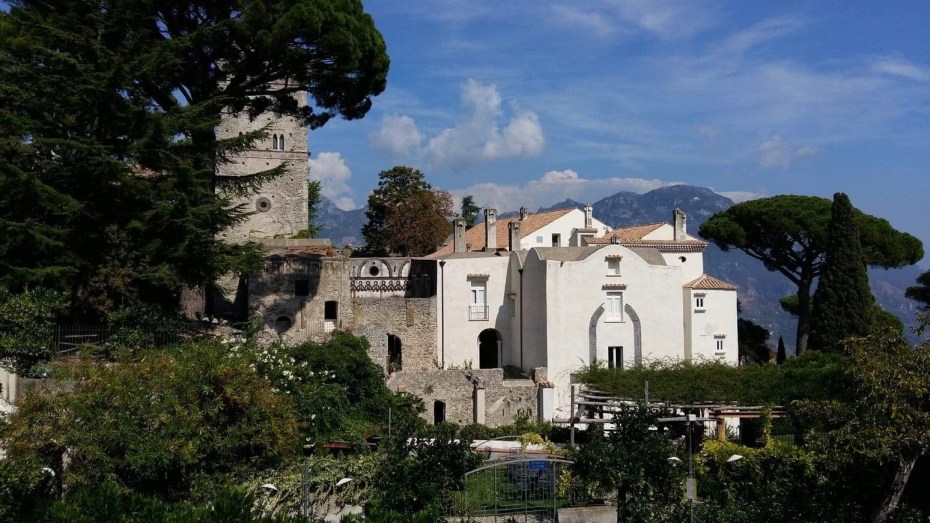
Of particular note is the Villa Rufolo which was built in the 13th century by the family of the same name. In 1851, the property was sold to a Scottish industrialist, who transformed the villa and gardens as they can be visited today.
Villa Rufolo in Ravello
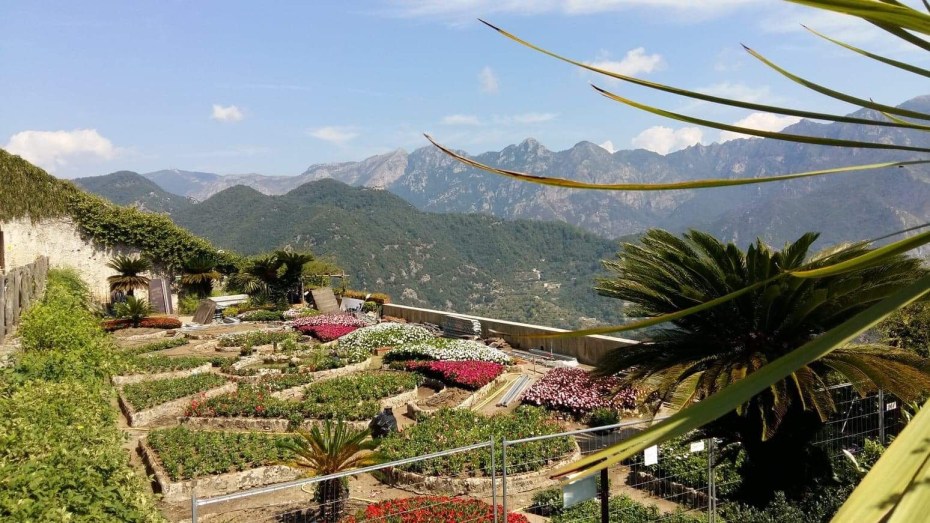
Admirers of the villa and their gardens, with an indescribable vision of the Amalfi Coast and the Gulf of Salerno in the Tyrrhenian Sea, among many others, were Giuseppe Verdi and Richard Wagner, the latter inspired himself in this magical place for his opera Parsifal. In memory of Wagner’s visit in 1880, the annual Wagner concerts have been taking place in the gardens of the villa since 1953. Particularly spectacular is the orchestra stage, which is built far beyond the garden walls and for the concert visitors hovers visually between the sky and the sea with a view into the infinite.
Ravello can be reached from Amalfi in a 30-minute bus ride and should definitely be visited. You will not regret it!
View from the gardens of Villa Rufolo
An der Amalfiküste, etwa 300 Meter über dem Meeresspiegel, liegt die kleine Stadt Ravello. Der Ort ist weltberühmt für seine klassischen Konzerte, die jedes Jahr in den Sommermonaten stattfinden. Ravello kann auf mehr als tausend Jahre Geschichte zurückblicken. Zu Beginn ließen sich reiche römische Familien an diesem Ort nieder um den marodierenden Barbaren zu entkommen. Mit dem aufkommenden Seehandel in der damaligen Republik Amalfi nahm auch die Bedeutung von Ravello zu. Als Ergebnis entwickelte sich im Laufe der Jahrhunderte eine reiche Bourgeoisie, die prunkvolle Paläste baute, die heute noch teilweise erhalten sind.
Besonders erwähnenswert ist die Villa Rufolo, die im 13. Jahrhundert von der gleichnamigen Familie erbaut wurde. Im Jahr 1851 wurde das Anwesen an einen schottischen Industriellen verkauft, der die Villa und die Gärten so umgestaltete, wie sie heute besichtigt werden können.
Gardens of Villa Rufolo
Bewunderer der Villa und ihrer Gärten, mit einer unbeschreiblichen Sicht auf die Amalfiküste und den Golf von Salerno im Tyrrhenischen Meer, waren unter vielen anderen, Giuseppe Verdi und Richard Wagner, letzterer inspirierte sich an diesem magischen Ort für seine Oper Parsifal. Zur Erinnerung an Wagners Besuch im Jahre 1880 finden seit 1953 die jährlichen Wagner-Konzerte in den Gärten der Villa statt. Besonders spektakulär ist die Orchestertribüne, die weit über die Gartenmauern hinaus gebaut ist und für die Konzertbesucher visuell zwischen Himmel und Meer schwebt mit einem Blick in die Unendlichkeit.
Ravello ist von Amalfi in einer 30-minütigen Busfahrt erreichbar und sollte unbedingt besucht werden. Du wirst es nicht bereuen!
The Paper Museum „Museo della Carta“ in Amalfi gives a comprehensive insight into the production of handmade paper and the art of paper processing in the Middle Ages. The Museum of today was before a papermill which produced paper in the vaults since the 12th century until 1969. The museum was established with the aim to preserve the historical heritage of the production of handmade paper and to revive this ancient art and bring it to a broader public.
In the 12th century, the producers of handmade paper were located in Syria and on the coasts of Palestine and the territories of the Maritime Republics, Amalfi, Pisa, Genoa and Venice.
My short video is an attempt to illustrate the method of paper making in the Middle Ages. The rags, which were crushed and then ground in the production of handmade paper with large hammers, were predominantly textiles whose fibers were suitable for paper production, such as linen, hemp cotton and jute. The handmade paper was drawn from a dilute pulp from the chest using a scoop and unrolled on a wool felt. The leaves were then stacked and subjected to a press to remove residual water. The final phase of paper processing was to dip the paper into gelatin to make it writable and then dry in the sun.
Das Papiermuseum „Museo della Carta” in Amalfi gibt einen umfassenden Einblick in die Herstellung von Büttenpapier und der Kunst der Papierverarbeitung im Mittelalter. In den Gewölben des heutigen Museums wurde seit dem 12. Jahrhundert bis in das Jahr 1969 Papier hergestellt. Einige Jahre später wurde dieses Museum gegründet mit dem Ziel das historische Erbe der Herstellung von Büttenpapier zu bewahren und diese alte Kunst wieder zu beleben und einer breiten Öffentlichkeit näher zu bringen.
Die Zentren zur Herstellung von Büttenpapier lagen im 12. Jahrhundert in Syrien und an den Küsten von Palästina sowie den Territorien der Seerepubliken, Amalfi, Pisa, Genua und Venedig.
Hammer to crush the textiles
Mein kurzes Video ist ein Versuch die Herstellungsmethode des Papiers im Mittelalter zu veranschaulichen. Die Lumpen, die bei der Herstellung von Büttenpapier mit großen Hämmern zerkleinert und dann gemahlen wurden, waren überwiegend Textilien, deren Fasern für die Papierherstellung geeignet waren, wie Leinen, Hanfbaumwolle und Jute. Das Büttenpapier wurde aus einem verdünnten Faserbrei aus der Bütte mit Hilfe eines Schöpfsiebes geschöpft und auf einem Wollfilz abgerollt. Die Blätter wurden dann aufeinandergestapelt und einer Presse zur Entfernung von Restwasser unterzogen. Die letzte Phase der Papierverarbeitung bestand darin, das Papier in eine Gelatine zu tauchen um es beschreibbar zu machen und anschliessend an der Sonne zu trocknen.
A small penguin had enough of the Antarctic cold, enough of the eternal ice and the daily hunt for fresh fish. The little penguin was longing for something new, far away from his world, behind the Antarctic sea, beyond the horizon. On a bitter cold winter day, his time has come and the little penguin jumped on a floating ice floe in the sea and let himself drift across the Atlantic into the Mediterranean until he reached Thessaloniki. In the harbor of this Greek town, the little penguin searched for a safe place; he found an empty barrel of wine in front of a pub where he decided to temporarily hide away. Clouded by the smell of alcohol, the little penguin fell into a deep and long sleep and woke up again in the cellar of the wine merchant Kordopulov from Melnik in Bulgaria.
Melnik is located about 150 kilometers southwest of the Bulgarian capital Sofia and is with about 200 inhabitants the smallest city in the country. The Greek border is only 20 kilometers away. Melnik is a tourist gem. The city is best known for its sandstone pyramids and the many listed monuments, churches and monasteries from the time of the Bulgarian Renaissance. However, Melnik is all about Wine and tourists especially come to this place to taste the unique, dark red Melnik wine.
I am convinced that the little penguin has fallen in love with Melnik, there is almost always sunny weather, there is plenty of wine and the friendly and cordial people welcome their guests from near and far with open arms and a fine glass of red wine from their own vineyards. But also the menu with the many Bulgarian specialties offers a treat for every gourmet. Of course, it also has something for the little penguin. The taste of the fresh trouts from the rivers and brooks of the nearby Pirin Mountains taste so good that it seems highly unlikely that the little penguin will again return to the bitterly cold Antarctic 🙂
Ein kleiner Pinguin hatte genug von der antarktischen Kälte, genug von dem ewigen Eis und der täglichen Jagd nach frischem Fisch. Der kleine Pinguin sehnte sich nach etwas Neuem, weit weg von seiner Welt hinter dem antarktischen Meer, jenseits des Horizonts. Eines Tages im Winter, es war bitterkalt, sprang der kleine Pinguin auf eine im Meer schwimmende Eisscholle und ließ sich über den Atlantik ins Mittelmeer treiben, bis er Thessaloniki erreichte. Im Hafen dieser griechischen Stadt suchte der kleine Pinguin nach einem sicheren Ort; er fand ein leeres Fass Wein vor einer Kneipe in der er sich vorübergehend versteckte. Durch den Geruch von Alkohol getrübt, fiel der kleine Pinguin in einen tiefen und langen Schlaf und erwachte erst wieder im Keller des Weinhändlers Kordopulov in der bulgarischen Stadt Melnik.
Melnik liegt etwa 150 Kilometer südwestlich der bulgarischen Hauptstadt Sofia und ist mit rund 200 Einwohnern die kleinste Stadt des Landes. Die griechische Grenze ist nur 20 Kilometer entfernt. Melnik ist ein touristisches Juwel. Die Stadt ist vor allem für ihre Sandsteinpyramiden und den vielen denkmalgeschützten Monumente, Kirchen und Klöster aus der bulgarischen Renaissance Epoche bekannt. In Melnik dreht sich alles um Wein. Touristen kommen hierher, um den einzigartigen, dunkelroten Melnik-Wein zu verkosten.
Ich bin überzeugt, dass sich der kleine Pinguin in Melnik verliebt hat, es ist fast immer sonniges Wetter, es gibt viel Wein und die freundlichen und herzlichen Menschen begrüßen ihre Gäste aus nah und fern mit offenen Armen und einem feinen Glas Rotwein aus ihren eigenen Weinbergen. Aber auch die Speisekarte mit den vielen bulgarischen Spezialitäten bietet für jeden Feinschmecker etwas. Natürlich hat es auch für den kleinen Pinguin einen Leckerbissen. Die frischen Forellen aus den Flüssen und Bächen des nahe gelegenen Pirin-Gebirges schmecken so gut, dass eine Rückkehr des kleinen Pinguin in die bitterkalte Welt der Antarktis höchst unwahrscheinlich erscheint 🙂
If you’re venturing to Costa Rica, chances are your guidebook pointed you with flapping hands and flashing lights to the cool, verdant paradise known as Monteverde. I love me some Monteverde, but dipping off the beaten path into San Luis adds a whole new and beautiful dimension to a visit to the area. Having lived […]
I shot this picture of a bicycle stand in Berlin. The example on the picture „Klimaschutzumsetzungsgerätfestmachstelle“ has “only” 40 letters, but the length of the word still impressed me. I believe, that the German language has the most letters-rich words of all languages. The longest words, which are also in the dictionary and which are not a mere string of indiscriminate nouns, are mainly found in laws and regulations.
Translation: Passenger cars energy consumption labeling ordinance
Do you know words with more than 62 letters?
Bicycle Stand in Berlin
Dieses Bild eines Fahrradständers habe ich in Berlin aufgenommen. Das abgebildete Beispiel „Klimaschutzumsetzungsgerätfestmachstelle“ hat zwar „nur „48 Buchstaben, aber die Länge des Wortes hat mich trotzdem beeindruckt. Die deutsche Sprache hat die buchstabenreichsten Wörter aller Sprachen, oder kennt ihr eine andere Sprache mit so langen Wörtern? Die längsten Wörter, welche auch im Duden stehen und keine reine Aneinanderreihung von wahllosen Nomen sind, finden sich vor allem in Gesetzen und Reglementen.
RVing (RV stands for Recreational Vehicle) is an extremely popular way to get out and experience the world for retirees across the globe. From the occasional trip to full time living, RVs provide a simple, comfortable and affordable way to travel year-round. Here are 3 great RV trips to take in retirement. These can be done as standalone trips, or easily incorporated into your full-time travels.
For more information about RV rentals, visit the company OutdoorsyHERE
Pacific Northwest, United States of America
This is a great summertime trip for retirees. While it is a common perception that this area has perpetual rain, there are great areas here to visit that buck that understanding. Located on the northern coast of the Olympic Peninsula, towns like Port Angeles, Sequim and Port Townsend are located in the rain shadow of the Olympic Mountains. Sequim, which is located in the center of that rain shadow, receives only 14 inches of rain per year. The vast majority of that rain falls between October and April. The weather in peak season between June and September is absolutely delightful. It is sunny with low humidity and temps in the 70’s to low 80’s (21 – 26 centigrade). This is one reason Sequim has been ranked as one of the best small towns in the pacific northwest to live. It is also a very popular destination for west coast residents to move to for retirement.
The towns here are quaint seaside towns, particularly Sequim and Port Townsend. The surrounding area is absolutely beautiful, with the Olympic National Park just to the southwest. Port Townsend has a great walkable downtown area with nice restaurants and a first-rate farmer market every weekend. The nearby Fort Worden State Park is a former military installation where many of the buildings have been converted to art facilities. This is a great place to learn art from traditional painting to advanced woodworking.
The area is also a gateway to Seattle, the San Juan Islands and Victoria, BC, which is a short ferry ride from Port Angeles. This area makes a great standalone trip. A visit here can be months long without running out of things to do.
Great RV Trips to Take in Retirement
MediterranenCoast, Spain and other European Countries
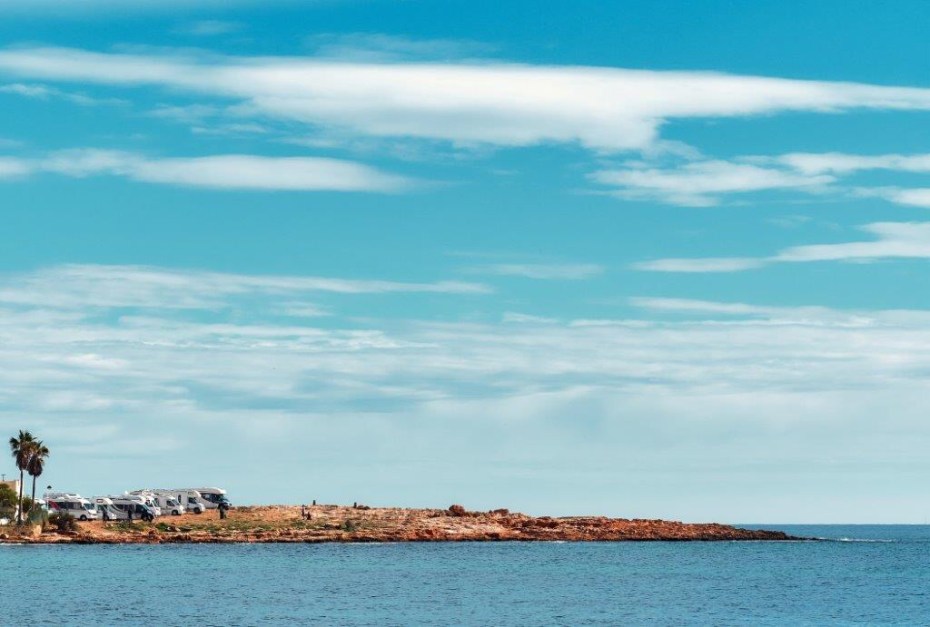
The Mediterranean Coast if Spain is a great location for an overseas retiree RV trip. Spain is often listed as one of the best places for US residents to retire on a budget. It has excellent culture, is generally friendly to foreigners, and sports a relatively low cost of living. The EU also has very streamlined travel regulations between nations, so it makes a great base camp to venture out and explore other EU member states and Switzerland.
RVing in Europe is typically done in smaller campervans than those you may be used to in the US. These RVs are designed to navigate the smaller roads in Europe and provide only the basic services you really need to live. A place to cook, a place to sleep and maybe a bathroom, although those are less common. The lack of RV amenities are made up for by the lifestyle in the area. The RV is truly just a place to sleep, the surrounding cities, towns and beaches will provide all amenities, activities and entertainment you could possibly ask for.
Barcelona, Valencia, Alicante and Malaga are all excellent destinations. Each could be a standalone destination, or a coastal trip covering all of them is certainly possible. Peak season is in the spring and summer, but the weather is mild year-round so off-season trips can still be great while avoiding the crowds.
To plan a trip like this consider using a private owner RV rental service. These services will connect you to a great rental RV that can be picked up on location in Spain.
Great RV Trips to Take in Retirement
Desert Southwest, United States of America
The southern US is a great retirement RV destination. The weather is fantastic year-round so you can plan your trip at any time. While the southern US as a whole is a great retirement RV destination, the desert southwest stands out for a number of reasons. First, it has great weather. Not only is it generally warm, but also generally very dry. The lack of humidity does three things. First, it makes the warmer temps feel more pleasant. Second, when the sun goes down the temps tend to cool faster, making sleeping more pleasant. Finally, drier air is easier to breath and can be beneficial for a number of health conditions common in the retired community.
The desert southwest is also less crowded then places like Florida during the snowbird season and the cost of living is generally lower. There are other places in the south that are also less crowded then Florida, like Alabama, Louisiana and Texas. These are all great areas in their own right, but the desert southwest gets the edge for its better weather and greater prevalence of free or cheap camping opportunities.
From Palm Springs, CA east to New Mexico there is a great mix of cities and towns with a broad range of cultural and entertainment facilities. These areas are surrounded by camping facilities ranging from vast free boondocking areas to massive high-end resorts. The diversity here will allow any retiree to live exactly as they desire.
RVing during retirement is a great way to get out and see the world. Here we have looked at three great RV trips for retirees. These trips demonstrate the options retirees have for RVing regardless of location or time of year. A great trip is taking a great destination and get the most out of it for yourself and any of these locations will allow you to do that.
For more information about RV-Rentals, visit the company OutdoorsyHERE













 Rolandomio Travel