Salar de Uyuni in the Andes, Bolivia

The Salar de Uyuni in the Andes in southwest Bolivia is the largest salt surface on earth (about 11’000 square kilometers). This place, at an altitude of about 3,700 meters, attracts tourists from all over the world. Most visitors are tourists from Japan and other Asian countries. There are daily flights from La Paz to Uyuni, a small town on the edge of this salt desert. Of course buses also run between Uyuni and for example La Paz, Potosi or Chile.

Several hotels were built in the area almost completely (walls, roofs, beds, tables) with salt blocks from the Salar. I stayed at the Hotel de Sal Luna Salada near Colchani. The price performance ratio of this hotel and spa is very good and the view over the salt desert is absolutely unique!

The Palacio de Sal was the first such hotel and was built in the middle of the salt desert, but had to be closed several years after its opening due to health and environmental problems. Today, most tours stop there for a lunch break and for shots of the former Palacio de Sal and its surroundings; the many national flags in front of the building are a popular photo motive. Actually, day trips to the salt desert in 4 × 4 jeeps are common and the cheapest way to visit the salt pans. The tours start in Uyuni around 10 am and end around 5 pm. I booked two day tours, one organized by my hotel and the other from a tour operator in Uyuni. The tours usually start with a visit to the Train Cemetery, followed by a short stop at Colchani, where a small salt factory is shown to tourists. From there you continue to the salt desert and there is enough time to photograph this fantastic and overwhelming salt surface and, during the rainy season, to admire the reflections of clouds and sky in the water. I am convinced that you will enjoy the beauty and tranquility of the Salar de Uyuni to the fullest. It will remain an unforgettable experience!

However, for how long? Our tour guide, who earns as Guide extra Money for her studies in La Paza, was very worried about the future of the Salar de Uyuni. She led us to small holes in the otherwise mirror-smooth surface of the salt desert. This anomaly is attributed to the recent intensification of the extraction of lithium carbonate from the water under the salt crust. This rare and sought-after resource is used for the production of high-performance batteries and promises huge profits for the poor country Bolivia, given the looming shift to electric vehicles. The beauty of the Salar might however be at risk considering that about 60% of the world reserves of Lithium are in Bolivia, namely in the Salar de Uyuni.

Der Salar de Uyuni in den Anden im Südwesten Boliviens ist die größte Salzfläche der Erde (ca. 11’000 Quadratkilometer). Dieser Ort auf einer Höhe von etwa 3.700 Metern zieht Touristen aus der ganzen Welt an. Die meisten Besucher sind Touristen aus Japan und anderen asiatischen Ländern. Es gibt tägliche Flüge von La Paz nach Uyuni, einer kleinen Stadt am Rande dieser Salzwüste. Natürlich fahren auch Busse zwischen Uyuni und zum Beispiel La Paz, Potosi oder Chile.

Mehrere Hotels wurden in der Gegend fast vollständig (Wände, Dächer, Betten, Tische) mit Salzblöcken aus dem Salar gebaut. Ich war im Hotel de Sal Luna Salada in der Nähe von Colchani. Das Preis-Leistungsverhältnis dieses Hotels ist sehr gut und der Blick über die Salzwüst absolut einzigartig!

Der Palacio de Sal war das erste derartige Hotel und wurde in der Mitte der Salzwüste errichtet, musste jedoch einige Jahre nach seiner Eröffnung wegen Gesundheits- und Umweltproblemen geschlossen werden. Heute halten die meisten Touren dort für eine Mittagspause und für Photoaufnahmen des ehemaligen Palacio de Sal und seiner Umgebung; die vielen Nationalflaggen vor dem Gebäude sind ein beliebtes Fotomotiv. Eigentlich sind Tagesausflüge in die Salzwüste in 4 × 4 Jeeps üblich und die billigste Art, die Salinen zu besuchen. Die Touren beginnen in Uyuni gegen 10 Uhr und enden gegen 17 Uhr. Ich buchte zwei Tagestouren, eine organisiert von meinem Hotel und die andere von einem Reiseveranstalter in Uyuni. Die Touren beginnen normalerweise mit einem Besuch des Zugfriedhofs, gefolgt von einem kurzen Halt in Colchani, wo eine kleine Salzfabrik den Touristen gezeigt wird. Von dort geht es dann weiter in die Salzwüste und es bleibt genügend Zeit, um diese fantastische und überwältigende Salzoberfläche zu fotografieren und während der Regenzeit die Spiegelungen von Wolken und Himmel im Wasser zu bewundern. Ich bin überzeugt, dass Sie die Schönheit und Ruhe des Salar de Uyuni in vollen Zügen genießen werden. Es wird ein unvergessliches Erlebnis bleiben!

Für wie lange aber? Eine junge Reiseleiterin, die sich hier mit ihren Führungen durch die Salzwüste ein Zusatzbrot für ihr Studium in La Paz verdient, zeigte sich sehr besorgt über die Zukunft der Salar de Uyuni. Sie führte uns zu kleinen Einbrüchen in der ansonsten spiegelglatten Oberfläche der Salzwüste. Diese Anomalie wird zurückgeführt auf die kürzlich begonnene Intensivierung der Extraktion von Lithiumkarbonat aus dem sich unter der Salzkruste befindlichen Wassers. Dieser seltene und begehrte Rohstoff wird für die Herstellung von leistungsstarken Batterien verwendet und verspricht in Anbetracht der sich abzeichnenden Verlagerung auf Elektrofahrzeuge riesige Gewinne für das arme Land Bolivien. Die Schönheit des Salar könnte jedoch in Gefahr sein, wenn man bedenkt, dass etwa 60% der Weltreserven von Lithium in Bolivien liegen, nämlich in der Salar de Uyuni.



Categories: Blogroll, Bolivia, Travel, Weltreisen | Tags: , , , , | 2 Comments

The „Wheels of Time“ in Sofia Railway Station

Sofia Central Railway Station is located about one kilometer north of the Lion Bridge, on the Boulevard Knjaginja Maria Louisa. Next to the train station is the newly built bus station Sofia.

The Sofia Central Railway Station opened on 1 August 1888. For the opening ceremony of the station came a train from London, which drove over Paris and continued on the following day via Plovdiv to Istanbul. The opening of the station coincided with the completion of a continuous rail link from Western Europe to Istanbul. Since then, Sofia Central Station has been one of the stops of the legendary Orient Express. Between 2012 and 2016, the entire complex of the station was completely renovated. The aim of the renovation was a new “old” central station with a modern and contemporary appearance.

The “Wheels of Time” is a fantastic digital mural (about 130 m2) in the station hall. The artist Prof. Dr. med. Boyan Dobrev gives the main station a modern and contemeporary appearance. This artistically designed digital mural, a mosaic of over 5,600 historical photos, shows and tells the story of the Bulgarian railway company. A visit to the Sofia Central Railway Station is worthwhile, even if you do not take a train.

Der Hauptbahnhof von Sofia liegt etwa einen Kilometer nördlich der Löwenbrücke, am Boulevard Knjaginja Maria Louisa. Neben dem Bahnhof grenzt der neu erbaute Busbahnhof Sofia.d

Der Hauptbahnhof von Sofia wurde am 1. August 1888 eröffnet. Zur Eröffnungszeremonie des Bahnhofs kam ein Zug aus London an, der über Paris fuhr und am folgenden Tag über Plovdiv nach Istanbul weiterfuhr. Mit der Bahnhofseröffnung wurde gleichzeitig die durchgehende Bahnverbindung von Westeuropa nach Istanbul fertiggestellt. Seitdem ist der Hauptbahnhof von Sofia eine der Haltestellen des legendären Orient Express. Zwischen 2012 und 2016 wurde der gesamte Komplex des Bahnhofs komplett renoviert. Ziel der Renovierung war ein neuer „alter“ Hauptbahnhof mit einem modernen und zeitgemäßen Erscheinungsbild.

Die “Räder der Zeit” ein phantastisches digitales Wandbild (ca. 130 m2) in der Bahnhofshalle des Künstlers Prof. Dr. Boyan Dobrev verleiht dem Hauptbahnhof ein modernes und zeitgemässe Erscheinungsbild. Dieses künstlerisch gestaltete digitale Wandbild, ein Mosaik aus über 5’600 historischen Fotos, zeigt und erzählt die Geschichte der bulgarischen Eisenbahngesellschaft. Ein Besuch des Hauptbahnhofs lohnt sich, auch dann, wenn Sie keinen Zug nehmen.

Categories: Blogroll, Bulgarien, Train, Travel | Tags: , , , , | 2 Comments

The Great Siege of Gibraltar in the 18th century

In 1704, Gibraltar was captured by the English Navy during the Spanish  Succession War with the support of Dutch marines. In the Peace Treaty of Utrecht in 1713, Gibraltar finally fell to Great Britain. The Great Siege of July 1779 to February 1783 was the last attempt by Spain and France to conquer Gibraltar. It was altogether the fourteenth attempt and last siege of Gibraltar since the capture of the Rock by the English.

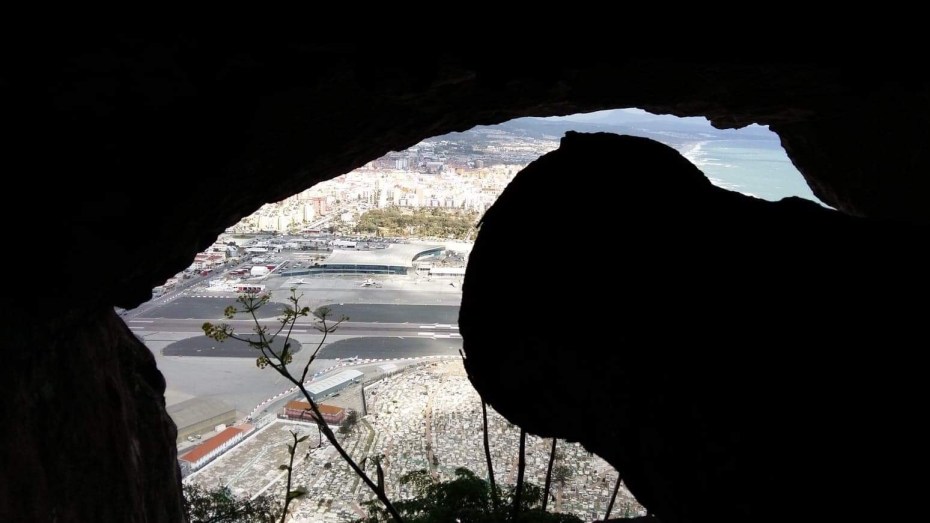
The warring parties faced each other mainly on the northern side of Gibraltar covering a stretch of about two kilometers. This borderland with Spain was at that time marshy and for an attacking infantry almost impossible to overrun. Today, this area is home to Gibraltar’s International Airfield and Cemetery. Strategically decisive for the defense of Gibraltar, however, was the immense firepower of the artillery.

Great Siege of Gibraltar

Great Siege of Gibraltar

During the Great Siege of the 18th century, a series of tunnels (also known as Upper Galleries) were smashed into the massive limestone in the northern wall of the cliff and equipped with a series of heavy cannon batteries. The firepower of these guns made it for the attackers impossible to reconquer Gibraltar during the Great Siege.

Great Siege of Gibraltar Canons Tunnels

Canon pointing to the North

Visiting these tunnels made me sweat a lot. A steep and winding path leads from the town of Gibraltar up to the entrance to the Upper Galleries. Alternatively, I could have taken a taxi bus, but the physical effort to the gun positions in the tunnels and the sightseeing of the defense system gave me an idea how exhausting it must have been for the fortress soldiers at that time to fulfill their defense mission.

Tunnels of Gibraltar

Great Siege of Gibraltar

Im Jahr 1704 wurde Gibraltar während den Spanischen Erbfolgekriege durch die Englische Marine mit Unterstützung niederländischer Seesoldaten eingenommen. Im Frieden von Utrecht im Jahre 1713 fiel Gibraltar endgültig an Grossbritannien. Die Große Belagerung von Juli 1779 bis Februar 1783 war der letzte Versuch von Spanien und Frankreich, Gibraltar zu erobern. Es war insgesamt der vierzehnte Versuch und letzte Belagerung von Gibraltar seit der Inbesitznahme des Felsens durch die Engländer.

Die kriegerischen Parteien standen sich vor allem an der nördlichen Seite Gibraltars auf einer Strecke von ungefähr zwei Kilometer gegenüber. Dieses Grenzland mit Spanien war damals sumpfig und für eine angreifende Infanterie, wenn überhaupt, nur mit schweren Verlusten zu überwinden. Heute befindet sich auf diesem Landstrich Gibraltar‘s Internationaler Flugplatz und der Friedhof.

Upper Galleries in Gibraltar

Upper Galleries in Gibraltar

Strategisch entscheidend für die Verteidigung Gibraltars war jedoch die Feuerkraft der Artillerie. In der Nordwand des Felsens wurden während der Grossen Belagerung im 18. Jahrhundert eine Reihe von Tunnels (auch als Upper Galleries bekannt) in den massiven Kalkstein geschlagen und mit einer Reihe von Batterien schwerer Kanonen bestückt. An der Feuerkraft dieser Kanonen scheiterte der letzte Versuch Gibraltar zu erobern.

Gibraltar

Gibraltar

Der Besuch dieser Tunnels brachte mich ganz schön ins Schwitzen. Ein steiler und kurvenreicher Weg führt von der Stadt Gibraltar hinauf zum Eingang in die Upper Galleries. Alternativ hätte ich mir auch einen Taxibus nehmen können, aber die physische Anstrengung zu den Kanonenstellungen in den Tunnels und die Besichtigung dieser Verteidigungsanlagen liess mich erahnen wie anstrengend es für die Festungssoldaten zu jener Zeit gewesen sein muss ihren Verteidigungsauftrag zu erfüllen.

Categories: Blogroll, Gibraltar, Landmark, Monument, Museum, Spain | Tags: | 6 Comments

The city of St. Gallen, Switzerland

Yesterday, I visited the city of Saint Gallen in eastern Switzerland. With its 75000 inhabitants, it is the eight largest city in the country. St. Gallen achieved world fame through its embroidery industry, which reached its peak at the end of the 19th century. At that time, embroidery products accounted with 18 percent for the largest share of exports in the Swiss economy. To this day, embroidery and haute couture fashion is made in St. Gallen, which woman does not know the fashion of Akris 🙂 Today, the beautiful embroidery can be admired in the Textile Museum St. Gallen that is dedicated to the history of the textile industry in eastern Switzerland. The city is also interesting for tourists due to the Abbey Church and Library, which has been included in the World Heritage list by UNESCO.

The Abbey church is considered one of the last monumental religious buildings of the late Baroque. Not less well known, especially in German-speaking countries, is the Business School of the University St. Gallen where many of today’s economic leaders have been formed. But the most popular “product” of the city of St. Gallen is the grilled veal bratwurst, also known as OLMA bratwurst! For me, eating this special bratwurst was the highlight of the day 🙂

Abbey Saint Gallen

Abbey Saint Gallen

Gestern besuchte ich die Stadt St. Gallen in der Ostschweiz. Mit ihren 75000 Einwohnern ist sie die acht grösste Stadt der Schweiz. Weltberühmtheit erlangte Sankt Gallen durch ihre Stickereiindustrie welche am Ende des 19. Jahrhunderts ihren Höhepunkt erlebte. Die Stickereierzeugnisse hatten damals mit 18 Prozent den grössten Anteil an den Exporten der Schweizer Wirtschaft. Bis heute wird in St. Gallen Stickerei- und Haute Couture Mode gemacht, welche Frau kennt nicht die Mode von Akris 🙂 Die wunderschönen Stickereien kann man heute im Textilmuseum St. Gallen sehen, welches sich der Geschichte der Ostschweizer Textilindustrie widmet. Die Stadt ist auch für Touristen interessant aufgrund der Stiftskirche und der Stiftsbibliothek, welche von der UNESCO in die Liste des Weltkulturerbes aufgenommen wurde. Die Stiftskirche gilt als eine der letzten monumentalen Sakralbauten des Spätbarocks. Nicht weniger bekannt, vor allem im deutschsprachigen Raum, ist die Business School der Universität St. Gallen welche viele der heutigen Wirtschaftsführer hervorgebracht hat. Aber das beliebteste und bekannteste „Produkt“ der Stadt St. Gallen ist die grillierte Kalbsbratwurst, auch bekannt als OLMA Bratwurst! Für mich war der Verzehr und Genuss dieser Wurst der Höhepunkt des Tages 🙂

Categories: Blogroll, Switzerland, Travel | Tags: , , , , , | 4 Comments

The mountain Matterhorn in Switzerland

This shot of the epically beautiful Matterhorn was taken while hiking the 5-Seenweg (Five Lakes Hike), which offers 5 stunning lake views of the alps and is a true Swiss classic.

via Matterhorn Over Stellisee — Lightbox3D

Categories: Blogroll, Switzerland, Travel | Tags: , | 15 Comments

Johannes Brahms in Baden-Baden, Germany

Did you know that the ingenious German composer Johannes Brahms (1833 – 1897) composed or completed many of his famous works in a mansard apartment in Baden-Baden-Lichtenfeld during the summer months of 1865-1874? This lavish spa resort, not far from his apartment, was also home to his lifelong friend, composer and pianist Clara Schuhmann. The shingled house from the 19th century remained unchanged until today; and the living quarters of Johannes Brahms are nowadays a museum.

More information about the Brahms Haus and the opening times of the museum can be found on the following website: http://www.brahms-baden-baden.de

Brahms House in Baden-Baden, Germany

Brahms House in Baden-Baden, Germany

Wussten Sie, dass der geniale deutsche composer Johannes Brahms (1833 – 1897) während den Sommermonaten der Jahre 1865 bis 1874 in einer Mansarden Wohnung in Baden-Baden-Lichtenfeld viele seiner berühmten Werke komponierte oder vollendete. In diesem eleganten Kurort, nur unweit von seiner Wohnung entfernt, wohnte zu dieser Zeit ebenfalls seine lebenslange Freundin, die Komponistin und Pianistin Clara Schuhmann. Das schindelgedeckte Haus aus dem 19. Jahrhundert blieb bis zur heutigen Zeit unverändert; und die Wohnräume von Johannes Brahms sind heute ein Museum.

Mehr Informationen über das Brahms Haus und die Öffnungszeiten des Museums finden Sie auf folgender Webseite: http://www.brahms-baden-baden.de

Categories: Art, Blogroll, Kunst, Museum, Music, Travel | Tags: , , , , , , | 1 Comment

Pickpockets and Trick Thieves „how to protect yourself“

It was on a sunny day in Naples in Italy. I was robbed by trick thieves and I didn’t notice anything, nothing! My wallet, which I carried in my zippered shoulder bag on me, was suddenly gone! I, the cautious, the “experienced” and prudent frequent traveler, was robbed unnoticed by master thieves. My cash, bank and credit cards were gone! The blocking of the cards came too late. The thieves had purchased goods within minutes after they have stolen my cards and without being in possession of the PIN codes! After noticing the theft, I immediately reported it to the Neapolitan police. There, they shrugged and asked me in which language I would like to file the criminal complaint. Stunt thieves of this kind, especially from organized and technically well-endowed gangs, often with the help of children, happen, according to the Police, daily and in large numbers. It seemed to me that the police had surrendered.

Quite apart from the emotional stress, the financial damage was partially covered by the insurance. As a result of this incident, I am even more cautious and have devised an “action plan” for future visits to high-risk cities and countries that I would like to share with you.

Here are my recommendations:

Purse and Jewelry – Carry your money, bank- and credit cards on the body in a money belt and never in your pocket, purse, shoulder bag or backpack. Carry your bags and backpacks closed in front of the body. I also recommend buying skimming-protected RFID bags or belt for additional security of your bank- and credit cards. Do not wear expensive jewelry and watches. Also, to reduce the risk of theft, leave everything that is not needed for your trip in the hotel safe.

Dangerous neighborhoods and streets – Inquire at the hotel about the “no go” neighborhoods and streets. A taxi costs a little money, but minimizes the risk of being robbed. For example, order a taxi at your hotel, not on the street. Avoid lonely paths, but also crowds on the sidewalks and squares or on public transport. Beware of thieves on motorcycles.

IDs, luggage and photographic – Keep your ID only in copy and place the originals in the hotel safe. Never leave your luggage and camera equipment, etc. unattended.

ATM and PIN – Withdraw your money at ATMs that are installed in a bank and keep your distance from other people so they can not spy on your PIN code. You should memorize the PIN code and never physically store it with your bank- and credit cards. Count the money discreetly and not in public on the street.

Emergence numbers – Make a note of the most important telephone numbers you need in an emergency, e.g. to block your bank and credit cards. Keep a copy of these numbers with you and leave a copy in the hotel safe. Do not rely on the stored numbers in the mobile phone, even that can be stolen.

Nevertheless and despite all these arrangements, I wish you a nice and relaxing holiday!

Naples Italy

Street in Naples Italy

Es geschah an einem sonnigen Tag in Neapel in Italien. Ich wurde von Trickdieben ausgeraubt und ich habe nichts bemerkt, nichts! Mein Portemonnaie, das ich in meiner mit Reissverschluss verschlossen Umhängetasche auf mir trug, war plötzlich weg! Ich, der vorsichtige, der “erfahrene” und umsichtige Vielreisende wurde unbemerkt von Meisterdieben bestohlen. Mein Bargeld, die Bank- und Kreditkarten waren weg! Das Blockieren der Karten kam zu spät. Die Diebe hatten Waren innerhalb von Minuten nachdem sie gestohlen wurden mit diesen Karten gekauft und das ohne im Besitz des PIN-Codes zu sein! Nachdem ich den Diebstahl bemerkt hatte, meldete ich mich sofort bei der neapolitanischen Polizei. Dort zuckten sie mit den Schultern und fragten mich, in welcher Sprache ich die Strafanzeige einreichen möchte. Trickdiebstähle dieser Art, vor allem von organisierten und technisch gut ausgestatteten Banden, oft mit Kindern, erklärten sie mir, passierten täglich in grosser Zahl. Es schien mir, als hätte die Polizei kapituliert.

Ganz abgesehen von der emotionalen Belastung wurde der finanzielle Schaden teilweise durch die Versicherung gedeckt. Als Folge dieses Vorfalls bin ich noch vorsichtiger und habe für mich einen “Aktionsplan” für zukünftige Besuche in Städten und Ländern mit hohem Risiko erarbeitet welchen ich mit euch teilen möchte.

Hier sind meine Empfehlungen:

Geldbörse und Schmuck – Tragen Sie Ihr Geld und ihre Bank- und Kreditkarten am Körper in einem Geldgürtel und niemals in Ihrer Tasche, Handtasche, Umhängetasche oder Rucksack. Tragen Sie Ihre Taschen und Rucksäcke geschlossen vor dem Körper. Außerdem empfehle ich den Kauf von Skimming-geschützten RFID-Taschen oder Gürtel für einen zusätzlichen Schutz Ihrer Bank- und Kreditkarten. Tragen Sie keine teure Schmuckstücke und Uhren. Um das Risiko eines Diebstahls zu reduzieren, lassen Sie alles was für Ihre Reise nicht benötigt wird im Hotelsafe. 

Gefährliche Viertel und Straßen – Erkundigen Sie sich im Hotel über die “no go” Viertel und Strassen. Ein Taxi kostet ein wenig Geld, aber das Risiko, bestohlen oder ausgeraubt zu werden, wird damit minimiert. Bestellen Sie das Taxi zum Beispiel in Ihrem Hotel und nicht auf der Straße. Vermeiden Sie einsame Pfade, aber auch Menschenmengen auf den Gehsteigen und Plätzen oder in öffentlichen Verkehrsmitteln. Vorsicht vor Dieben auf Motorrädern.

Ausweise, Gepäck und Fotoausrüstung – Bewahren Sie Ihren Ausweis nur in Kopie auf und legen Sie die Originale in das Hotelsafe. Lassen Sie Ihr Gepäck und Ihre Kameraausrüstung, etc. niemals unbeaufsichtigt.

Geldautomat und PIN – Heben Sie Bargeld an Geldautomaten ab welche in einer Bank installiert sind und halten Sie Abstand zu anderen Personen damit sie Ihren PIN-Code nicht ausspionieren können. Sie sollten sich den PIN merken und ihn auf keinen Fall mit Ihrer Kreditkarte zusammen physisch aufbewahren. Zählen Sie das Geld diskret und nicht auf der Straße.

Notrufnummern – Notieren Sie sich die wichtigsten Telefonnummern die Sie im Notfall benötigen, z.B. um Ihre Bank- und Kreditkarten zu blockieren. Tragen Sie eine Kopie dieser Nummern bei sich und hinterlassen Sie eine Kopie im Hotelsafe. Verlassen Sie sich nicht auf die gespeicherten Nummern im Mobiltelefon, auch das kann gestohlen werden.

Und trotz all dieser Vorkehrungen wünsche ich Ihnen einen schönen und erholsamen Urlaub!

Categories: Blogroll, Italy, Travel, Weltreisen | Tags: , , , , , | 8 Comments

Exhibition the „Magic of Salt“ by Irene Mueller

Rolandomio Travel cordially invites you to visit the art exhibition of the Artist Irene Mueller from June 6 to 15. The Opening of the exhibition is on Thursday, June 6, at 6.30pm. The event takes place in the artist’s studio: “Artspace Irene Mueller”, Victoria Areal, Building J, Muehlegasse 18, CH-6340 Baar – Switzerland.

The studio will be open to visitors during the exhibition on Thursdays, Fridays and Saturdays from 11am to 7pm.

Irene Mueller presents a selection of her latest works with the theme the „Magic of Salt”.

We look forward to welcoming you to this event.

http://www.artspaceirene.com

Artspace Irene Mueller Switzerland

„Magic of Salt“ by Irene Mueller

Rolandomio Travel lädt Sie herzlich ein, die Kunstausstellung der Künstlerin Irene Müller vom 6. bis 15. Juni zu besuchen. Die Vernissage findet am Donnerstag, 6. Juni, um 18.30 Uhr statt. Das Atelier ist während der Ausstellung an den beiden Donnerstagen, Freitagen und Samstagen von 11.00 bis 19.00 Uhr für Besucher geöffnet.

Der Anlass findet im Künstleratelier statt: „Artspace Irene Müller“, Victoria Areal, Gebäude J, Mühlegasse 18, CH-6340 Baar – Schweiz.

Irene Müller zeigt eine Auswahl ihrer neuesten Arbeiten zum Thema die „Magie des Salzes“.

Wir freuen uns, Sie bei dieser Veranstaltung begrüssen zu dürfen.

Categories: Art, Blogroll | 3 Comments

Spain in the Movies: Must Visit Film locations in Spain

Following my last post, “Madrid in the Movies”, I will expand and tell you about the unlikely and curious locations around Spain. A must-visit for all film buffs! I have also included Game of Thrones because with its popularity it’s always worth a mention!

via Spain in the Movies: Must Visit Film locations around Spain — Madrid Insider

Categories: Art, Blogroll, Movies, Spanien, Travel | Tags: , , | 3 Comments

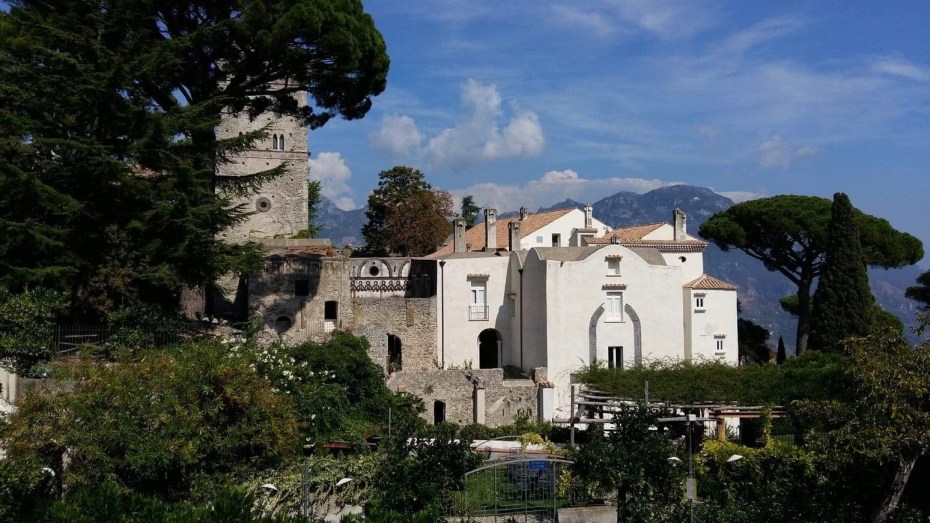
Ravello, Amalfi Coast, Italy

At the Amalfi Coast, on about 300 meters above sea level, is the small town Ravello. The place is world famous for its classical concerts which take place every year during the summer months. Ravello can look back on more than one thousand years of history. In the beginning, rich Roman families settled down at this place to escape from the marauding barbarians. With the emerging maritime trade in the then Republic of Amalfi, the importance of Ravello also increased. As a result, a rich bourgeoisie developed over the centuries, which built palatial palaces that are still partially preserved today.

Of particular note is the Villa Rufolo which was built in the 13th century by the family of the same name. In 1851, the property was sold to a Scottish industrialist, who transformed the villa and gardens as they can be visited today.

Villa Rufolo in Ravello

Villa Rufolo in Ravello

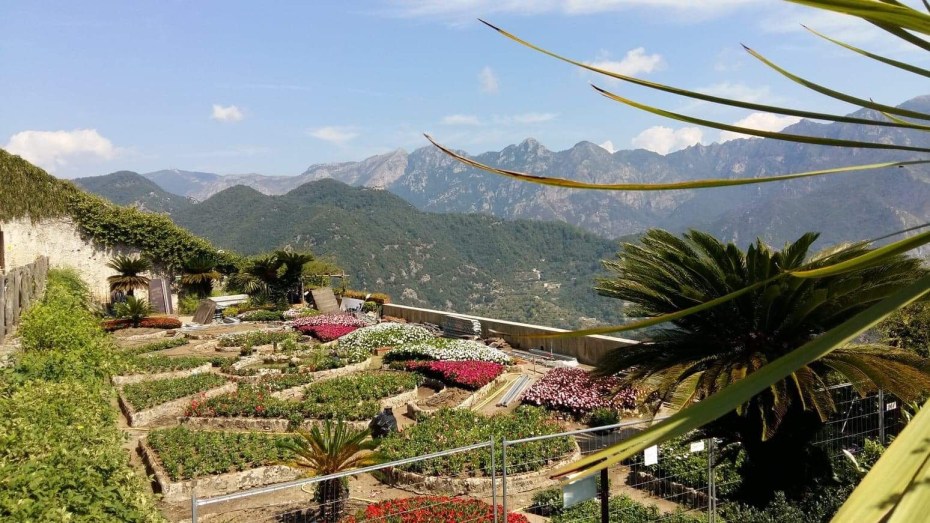
Admirers of the villa and their gardens, with an indescribable vision of the Amalfi Coast and the Gulf of Salerno in the Tyrrhenian Sea, among many others, were Giuseppe Verdi and Richard Wagner, the latter inspired himself in this magical place for his opera Parsifal. In memory of Wagner’s visit in 1880, the annual Wagner concerts have been taking place in the gardens of the villa since 1953. Particularly spectacular is the orchestra stage, which is built far beyond the garden walls and for the concert visitors hovers visually between the sky and the sea with a view into the infinite.

Ravello can be reached from Amalfi in a 30-minute bus ride and should definitely be visited. You will not regret it!

View from the gardens of Villa Rufolo

View from the gardens of Villa Rufolo

An der Amalfiküste, etwa 300 Meter über dem Meeresspiegel, liegt die kleine Stadt Ravello. Der Ort ist weltberühmt für seine klassischen Konzerte, die jedes Jahr in den Sommermonaten stattfinden. Ravello kann auf mehr als tausend Jahre Geschichte zurückblicken. Zu Beginn ließen sich reiche römische Familien an diesem Ort nieder um den marodierenden Barbaren zu entkommen. Mit dem aufkommenden Seehandel in der damaligen Republik Amalfi nahm auch die Bedeutung von Ravello zu. Als Ergebnis entwickelte sich im Laufe der Jahrhunderte eine reiche Bourgeoisie, die prunkvolle Paläste baute, die heute noch teilweise erhalten sind.

Besonders erwähnenswert ist die Villa Rufolo, die im 13. Jahrhundert von der gleichnamigen Familie erbaut wurde. Im Jahr 1851 wurde das Anwesen an einen schottischen Industriellen verkauft, der die Villa und die Gärten so umgestaltete, wie sie heute besichtigt werden können.

Gardens of Villa Rufolo

Gardens of Villa Rufolo

Bewunderer der Villa und ihrer Gärten, mit einer unbeschreiblichen Sicht auf die Amalfiküste und den Golf von Salerno im Tyrrhenischen Meer, waren unter vielen anderen, Giuseppe Verdi und Richard Wagner, letzterer inspirierte sich an diesem magischen Ort für seine Oper Parsifal. Zur Erinnerung an Wagners Besuch im Jahre 1880 finden seit 1953 die jährlichen Wagner-Konzerte in den Gärten der Villa statt. Besonders spektakulär ist die Orchestertribüne, die weit über die Gartenmauern hinaus gebaut ist und für die Konzertbesucher visuell zwischen Himmel und Meer schwebt mit einem Blick in die Unendlichkeit.

Ravello ist von Amalfi in einer 30-minütigen Busfahrt erreichbar und sollte unbedingt besucht werden. Du wirst es nicht bereuen!

Categories: Blogroll, Italy, Monument, Museum | Tags: , , | 17 Comments

The Polybahn or “Polybähnli” in Zurich, Switzerland

I can still remember the year of 1981 in Zurich. At that time, I happened to witness the filming of some scenes of the French action film “Espion, lève-toi” starring Lino Ventura and Michel Piccoli. The first scene that I witnessed was taken on the Tessinerplatz opposite the train station Zürich Enge and the second in the bottom station of the Polybahn near the Central which is located on the edge of the old town of Zurich and entrance to the fun and restaurant mile “Niederdörfli”. In fact, they filmed a shooting between Lino Ventura and Michel Piccoli in a wagon of the Polybahn.

The Polybahn or in Swiss German, the “Polybähnli”, also known as Student Express, is a mountain railway which connects the Central, not far from Zurich main station on a length of 176 meters with the ETH (Eidgenössisch Technische Hochschule Zürich). The height difference the “Polybähnli” has to master since 1886 is 41 meters 🙂

I am almost certain that the student and later Nobel Price winner Albert Einstein must have taken the „Polybähnli“ during his student years between 1896 and 1900 in Zurich (at that time, Polytechnic Zurich) to enjoy a cold beer or two in the “Niederdörfli” after the exhausting lectures 🙂 at ETH.

Polybahn Zürich

Polybahn or Polybähnli in Zurich, Switzerland

Ich kann mich noch gut an das Jahr 1981 in Zürich erinnern. Damals wurde ich zufällig Zeuge von Dreharbeiten des französischen Spielfilms „der Maulwurf“ mit Lino Ventura und Michel Piccoli. Das erste Shooting fand auf dem Tessinerplatz gegenüber dem Bahnhof Zürich Enge und der zweite Dreh in der Talstation der Polybahn in der Nähe des Central am Rande der Altstadt von Zürich und Eingang zur Vergnügungs- und Restaurantmeile “Niederdörfli” statt. In dem besagten Film kam es zu einer Schiesserei zwischen Lino Ventura und Michel Piccoli in einem Wagen der Polybahn.

Bottom Station Polybahn, Central Zurich

Bottom Station Polybahn, Central Zurich

Die Polybahn oder auf Schweizerdeutsch “Polybähnli”, auch bekannt als Studenten Express, ist eine Bergbahn die auf 176 Metern Länge das Central unweit des Zürcher Hauptbahnhofs mit der ETH (Eidgenössisch Technische Hochschule, Zürich) verbindet. Der Höhenunterschied, den das Polybähnli seit 1886 bewältigen muss, beträgt 41 Meter 🙂

Ich bin mir fast sicher, dass der Student und spätere Nobelpreisträger Albert Einstein während seiner Studienzeit zwischen 1896 und 1900 in Zürich an der ETH (damals Polytechnic Zurich) das „Polybähnli“ benutzt haben muss um sich hie und da nach den anstrengenden Verlesungen ein kühles Bier im „Niederdörfli“ zu gönnen 🙂

Categories: Blogroll, Landmark, Switzerland, Train, Travel | Tags: , , | 4 Comments

Invitation to subscribe my Travel Blog!

Dear Visitors and Followers,

Many thanks for subscribing Rolandomio‘s Travel Blog! 

I am striving to publish interesting posts with travel news, stories, suggestions and recommendations on a regular basis. My major goal with this Blog is to give you travel inspirations and to show you that your „paradise“ is only a plane or train ticket (or boat ride) away.

For all those that are not registered on WordPress, you can receive my Blog posts via E-Mail. ThereforeI invite you to subscribe the Blog by entering your E-Mail Adress at the bottom of this Post „Follow Roandomio Travel via E-Mail“.

Thanks and happy travels!

Buen Camino, Roland

Categories: Blog, Blogroll, Travel | Tags: , , , | 28 Comments

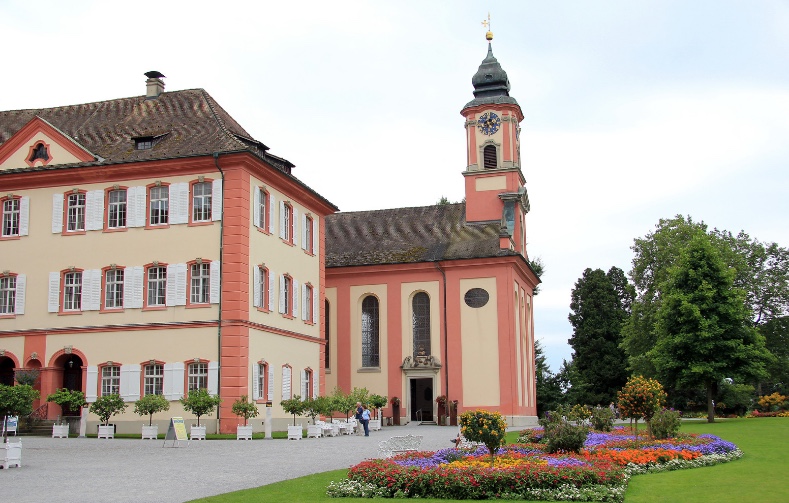
Mainau the Flower Island in the Lake Constance

Behind the Markermeer in the Netherlands and Lake Geneva, adjacent to Switzerland and France, Lake Constance is the third largest lake in Central Europe with a length of 63 kilometers and a surface area of 536 km2. Lake Constance in the foothills of the Alps between Germany, Austria and Switzerland is fed by the Rhine and consists of the Obersee and Untersee. Around the lake there are numerous vacation spots of which I prefer for my excursions the German south-facing side of the lake. 

My personal favorit among the fifteen small and larger peninsulas and islands of Lake Constance is the flower island of Mainau, the third largest island behind Lindau and Reichenau. The unique flower splendor of Mainau is favored by a special microclimate and offers its visitors an atmosphere of natural beauty, peace and relaxation. In the 1930s, the owner and master of the island, Lennart Count Bernadotte, great-grandson of Grand Duke Frederick I, made Mainau to a flower and plant paradise. The island is open to the public and can be reached from the parking lot via a bridge. It also has its own jetty. The nearest major cities are Constance, Meersburg and Überlingen.

Flower Island Mainau

Flower Island Mainau

Hinter dem Markermeer in den Niederlanden und dem Genfersee, angrenzend an die Schweiz und Frankreich, ist der Bodensee mit einer Länge von 63 Kilometer und einer Fläche von 536 km2 der drittgrösste See Mitteleuropas. Der Bodensee im Alpenvorland zwischen Deutschland, Österreich und der Schweiz wird vom Rhein gespiesen und besteht aus dem Obersee und Untersee. Rings um den See liegen zahlreiche Urlaubsorte wovon ich die Deutsche, nach Süden ausgerichtete Seite des Seeufers, bei meinen Ausflügen besonders bevorzuge. 

Unter den vielen kleinen und grösseren Halbinseln und Inseln des Bodensees ist die Blumeninsel Mainau, die drittgrösste Insel hinter den Inseln Lindau und Reichenau, mein persönlicher Favorit. Die einmalige Blumenpracht der Insel Mainau wird von einem besonderen Mikroklima begünstigt und bietet seinen Besuchern eine Atmosphäre der Naturschönheit, Ruhe und Erholung. In den 1930er Jahren machte der Besitzer und Herr der Insel, Lennart Graf Bernadotte, Urenkel von Grossherzog Friedrich I., die Mainau zu einem Blumen- und Pflanzenparadies. Die Insel ist öffentlich zugänglich und vom Parkplatz kommend über eine Brücke zu erreichen. Sie verfügt ebenfalls über einen eigenen Schiffsanleger. Die nächsten grösseren Städte sind Konstanz, Meersburg und Überlingen. 

Categories: Blogroll, Germany, Nature, Travel | Tags: , , , | 1 Comment

Friedrichshafen, the city of the Zeppelins

The weather was not particularly good this Tuesday, it was raining mostly and the temperature was almost wintery. It was not the ideal day for a boat trip on the lake. Nevertheless, I decided to take the ferry from Romanshorn in Switzerland, to cross Lake Constance to Friedrichshafen on the German side of the lake, and to have in the „city of the airships“ a nice day 🙂

Did you know that the famous Zeppelins were built in Friedrichshafen and are again rebuilt since 1993? The construction of the first Zeppelins began in 1899 in a floating assembly hall on Lake Constance, in a bay near Friedrichshafen. The Zeppelins were airships named after their inventor Ferdinand Graf von Zeppelin. These sometimes more than 200 meters long monsters were used from 1900 to 1940 both for passenger transport and military.

Graf Ferdinand von Zeppelin

Graf Ferdinand von Zeppelin

Starting 1930, a transatlantic service to North and South America was operated. However, the initial boom came to an abrupt end with the disaster at Lakehurst, New Jersey, a small town about one hundred kilometers southwest of New York! On May 6, 1937, the LZ 129 caught fire whilst landing, and within a few seconds the world’s largest airship, the Hindenburg, went up in flames and 36 of the 97 people on board lost their lives.

With the catastrophe of Lakehurst, civilian air navigation had temporarily ceased, that is until the early 1990s. At that time, 1993, the ZLT Zeppelin Luftschifftechnik GmbH was founded. Today, this company is building the new and safe Zeppelin NT (New Technology) airships. Very special sightseeing experiences are offered with low altitude flights (about 300 meters) over the Lake Constance region and flights to Munich.

A few steps from the berth of the ferry is the Zeppelin Museum; it presents on 4000 m2 of exhibition space, the world’s largest collection of airships. A unique experience, for all those interest in Zeppelins!

Floating assembly hall on Lake Constance

Floating assembly hall on Lake Constance

Das Wetter war heute Dienstag nicht besonders gut, es regnete mehrheitlich und die Temperatur winterlich. Es war eigentlich nicht der ideale Tag für eine Schifffahrt auf dem See. Trotzdem habe ich mich entschlossen, mit dem Fährschiff von Romanshorn in der Schweiz ausgehend, den Bodensee nach Friedrichshafen auf der deutschen Seeseite zu überqueren und mir dort, in der Stadt der Luftschiffe, einen schönen Tag zu machen. 

Ferry Romanshorn to Friedrichshafen

Ferry Romanshorn to Friedrichshafen

Haben Sie gewusst, dass in Friedrichshafen die berühmten Zeppeline gebaut wurden und seit 1993 wieder gebaut werden? Die Montage des ersten Zeppelins begann 1899 in einer schwimmenden Montagehalle auf dem Bodensee in einer Bucht bei Friedrichshafen. Zeppeline waren Starrluftschiffe, die nach ihrem Erfinder Ferdinand Graf von Zeppelin benannt wurden. Diese zum Teil über 200 Meter langen Ungetüme wurden von 1900 bis 1940 sowohl zur Personenbeförderung als auch militärisch eingesetzt.

Ab 1930 wurde ein transatlantischer Liniendienst nach Nord- und Südamerika eingerichtet. Der anfängliche Boom fand jedoch mit dem Unglück in Lakehurst im Bundesstaat New Jersey, hundert Kilometer südwestlich von New York, ein jähes Ende! Am 6. Mai 1937 fing bei der Landung das Heck von LZ 129 Feuer, und innerhalb von wenigen Sekunden ging das größte Luftschiff der Welt, die Hindenburg,  in Flammen auf und 36 von den 97 Menschen an Bord fanden den Tod. 

Mit der Katastrophe von Lakehurst hatte sich die zivile Luftschifffahrt vorübergehend erledigt, das heisst bis in die frühen 1990er Jahre. Damals, 1993, wurde die ZLT Zeppelin Luftschifftechnik GmbH gegründet. Heute werden von dieser Firma neue und sichere Luftschiffe der Marke Zeppelin NT (Neue Technologie) gebaut. Ein ganz besonderes Sightseeing Erlebnis sind die aus 300 Meter Höhe angebotenen Rundflüge über die Bodensee Region und Flüge bis nach München.

Ein paar Schritte von der Anlegestelle des Fährschiffs entfernt befindet sich das Zeppelin Museum. Dort wird auf 4000 m2 Ausstellungsfläche die weltweit größte Sammlung zur Luftschifffahrt präsentiert. Für Zeppelin interessierte, ein einmaliges Erlebnis!

Categories: Blogroll, Germany, History, Museum, Switzerland, Travel | Tags: , , , , | 1 Comment

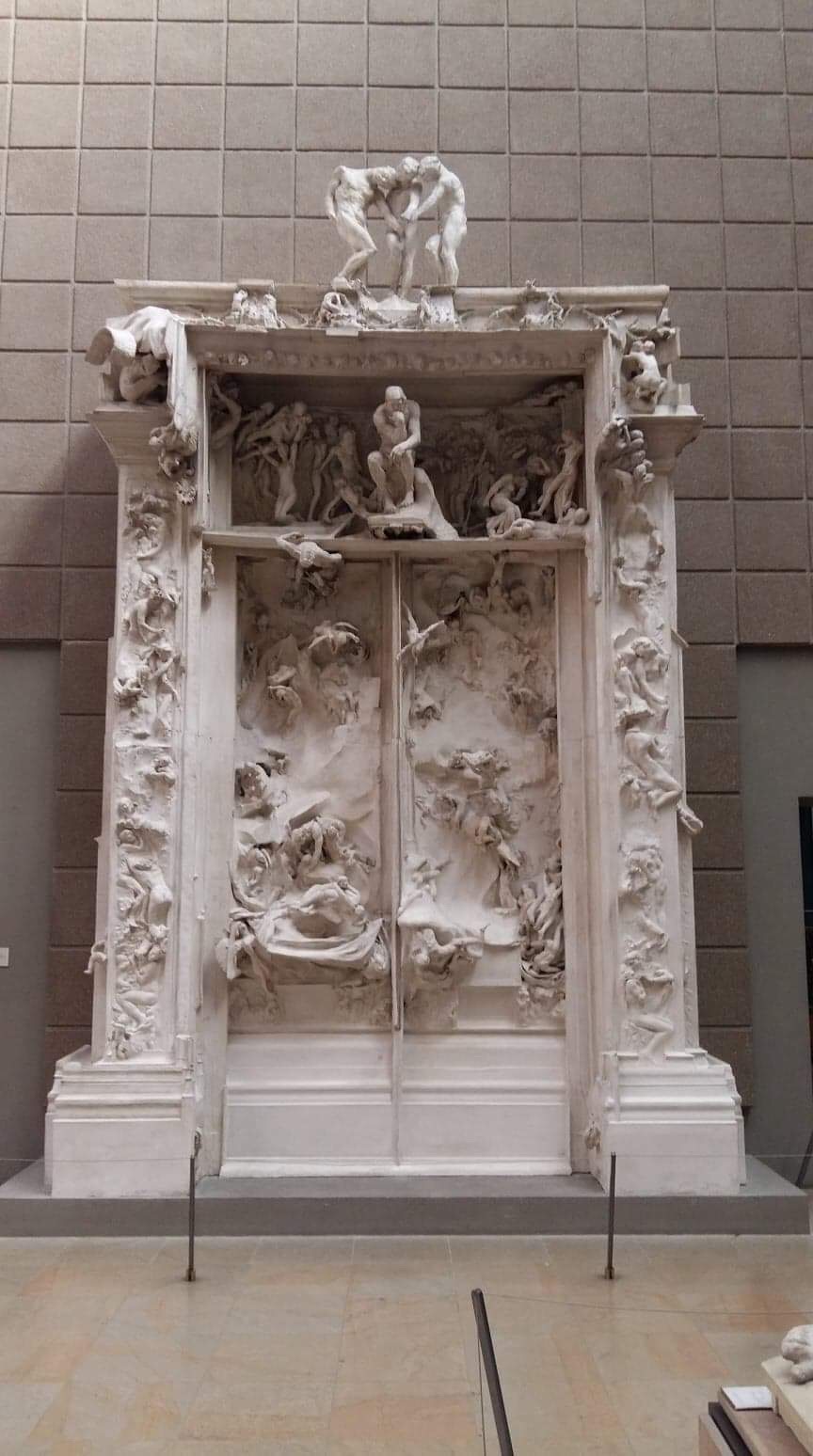
Gate of Hell by Auguste Rodin

Last autumn I visited the Kunsthaus in Zurich. The main entrance was closed due to construction works during the last two years and the provisional entrance was moved about 100 meters to the right. The famous „Gate of Hell“ by Auguste Rodin was freestanding next to this temporary entrance to the Kunsthaus. At present the building site is being cleared of building fences and machines. From September 2019, visitors will be able to enter the museum unhindered via the main entrance. I assume that the „Gate of Hell“ will also be moved back to its original location, i.e. not as entrance to hell, but next to the main entrance door to the Kunsthaus Zürich where it was exposed since 1949.

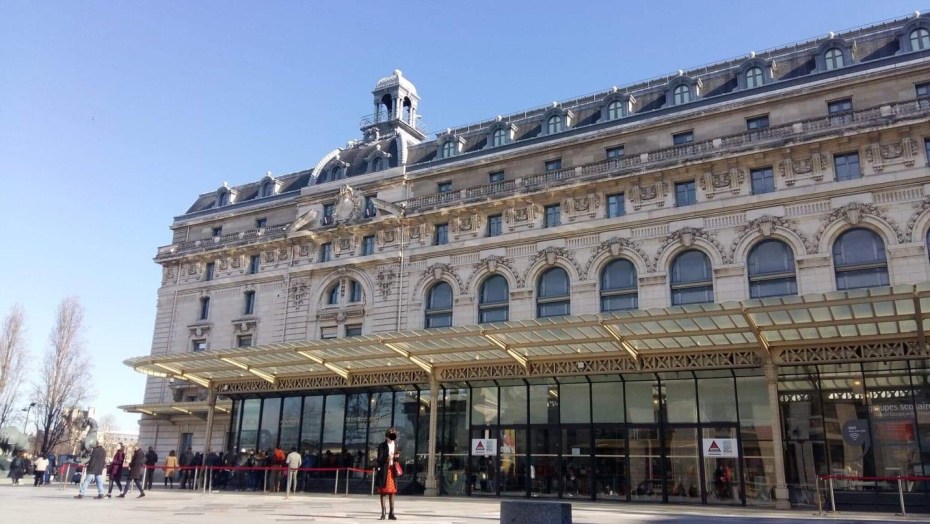
Musée d‘Orsay in Paris

Musée d‘Orsay in Paris

Speaking of Rodin’s „Gate of Hell“, the origianl which was restored in 1917 is on display today in the Musée d’Orsay on the Seine in Paris. A copy thereof is in the Musée Rodin, also in Paris, and other museums in South Korea, México, the United States and the Kunsthaus Zürich in Switzerland. In total there are seven copies of the „Gates of Hell“ worldwide. At least that’s what I understood from the explanations of the tour guide during my last visit to the Musée d’Orsay in Paris a few weeks ago.

Gate of Hell in the Musée d‘Orsay in Paris

Gate of Hell – Musée d‘Orsay Paris

Im vergangen Herbst habe ich das Kunsthaus in Zürich besucht. Der Haupteingang war während den letzten zwei Jahren baubedingt geschlossen und der provisorische Eingang war einige Meter nach rechts verschoben. Das berühmte Höllentor von Auguste Rodin befand sich während dieser Zeit freistehend neben diesem provisorischen Eingang in das Kunsthaus. Gegenwärtig wird der Bauplatz von Bauzäunen und -maschinen befreit. Ab September 2019 können Besucherinnen und Besucher das Museum wieder ungehindert über den Haupteingang betreten. Ich gehe davon aus, dass auch das Höllentor an seinen ursprünglichen Ort zurückversetzt wird, d.h. nicht als Eingang zur Hölle, sondern neben den Haupteingang in das Kunsthaus Zürich wo es seit 1949 stand.

The Hell’s Gate - Kunsthaus Zurich

Gate of Hell – Kunsthaus Zurich

Das im Jahr 1917 restaurierte Original von Auguste Rodin’s Höllentor wird heute im Musée d‘Orsay an der Seine in Paris ausgestellt. Eine Kopie davon befindet sich im Musée Rodin, ebenfalls in Paris, und weitere Kopien dieses Exemplars in anderen Museen in Süd Korea, México, den Vereinigten Staaten und dem Kunsthaus Zürich in der Schweiz. Weltweit existieren sieben Höllentore von Auguste Rodin. Soweit habe ich das auf jeden Fall aus den Erläuterungen des Tourguides, während meines letzten Besuchs des Musée d’Orsay’s vor ein paar Wochen, verstanden.

Categories: Art, Blogroll, France, Kunst, Landmark, Museum | Tags: , , , , | 2 Comments

The Lion Monument in Lucerne, Switzerland

The Lion Monument is located in the center of the city of Lucerne, in front of the Glacier Garden, a natural monument and museum, and not far from the Bourbaki Panorama on Löwenplatz.

The monument commemorates the heroic death of the Swiss Guards who died in 1792, who protected the French King Louis XVI from his own people and were killed by the revolutionaries in the assault on the Royal Palace and the Tuileries. The carved in stone “dying lion of Lucerne” is one of the most famous monuments in Switzerland. Every year it is visited and photographed by nearly 2 million tourists from all over the world.

Lion Monument Lucerne

The Lion Monument Lucerne

Das Löwendenkmal befindet sich im Zentrum der Stadt Luzern und liegt vor dem Gletschergarten, ein Naturdenkmal mit Museum, unweit vom Bourbaki Panorama am Löwenplatz. 

Das Monument erinnert an den Heldentot der 1792 gefallenen Schweizergardisten die den französischen König Louis XVI vor seinem eigenen Volk beschützten und von den Revolutionären beim Sturm auf das Königliche Schloss und die Tuilerien getötet wurden. Der in Stein gemeisselte „sterbende Löwe von Luzern“ ist eines der bekanntesten Denkmäler in der Schweiz. Jedes Jahr wird er von beinahe 2 Millionen Touristen aus der ganzen Welt besucht und fotografiert.


Categories: Blogroll, Monument, Museum, Switzerland, Travel | Tags: , | 8 Comments

A long trip from the Antarctic to Melnik in the Pirin Mountains, Bulgaria

A small penguin had enough of the Antarctic cold, enough of the eternal ice and the daily hunt for fresh fish. The little penguin was longing for something new, far away from his world, behind the Antarctic sea, beyond the horizon. On a bitter cold winter day, his time has come and the little penguin jumped on a floating ice floe in the sea and let himself drift across the Atlantic into the Mediterranean until he reached Thessaloniki. In the harbor of this Greek town, the little penguin searched for a safe place; he found an empty barrel of wine in front of a pub where he decided to temporarily hide away. Clouded by the smell of alcohol, the little penguin fell into a deep and long sleep and woke up again in the cellar of the wine merchant Kordopulov from Melnik in Bulgaria.

Melnik is located about 150 kilometers southwest of the Bulgarian capital Sofia and is with about 200 inhabitants the smallest city in the country. The Greek border is only 20 kilometers away. Melnik is a tourist gem. The city is best known for its sandstone pyramids and the many listed monuments, churches and monasteries from the time of the Bulgarian Renaissance. However, Melnik is all about Wine and tourists especially come to this place to taste the unique, dark red Melnik wine.

I am convinced that the little penguin has fallen in love with Melnik, there is almost always sunny weather, there is plenty of wine and the friendly and cordial people welcome their guests from near and far with open arms and a fine glass of red wine from their own vineyards. But also the menu with the many Bulgarian specialties offers a treat for every gourmet. Of course, it also has something for the little penguin. The taste of the fresh trouts from the rivers and brooks of the nearby Pirin Mountains taste so good that it seems highly unlikely that the little penguin will again return to the bitterly cold Antarctic 🙂

Ein kleiner Pinguin hatte genug von der antarktischen Kälte, genug von dem ewigen Eis und der täglichen Jagd nach frischem Fisch. Der kleine Pinguin sehnte sich nach etwas Neuem, weit weg von seiner Welt hinter dem antarktischen Meer, jenseits des Horizonts. Eines Tages im Winter, es war bitterkalt, sprang der kleine Pinguin auf eine im Meer schwimmende Eisscholle und ließ sich über den Atlantik ins Mittelmeer treiben, bis er Thessaloniki erreichte. Im Hafen dieser griechischen Stadt suchte der kleine Pinguin nach einem sicheren Ort; er fand ein leeres Fass Wein vor einer Kneipe in der er sich vorübergehend versteckte. Durch den Geruch von Alkohol getrübt, fiel der kleine Pinguin in einen tiefen und langen Schlaf und erwachte erst wieder im Keller des Weinhändlers Kordopulov in der bulgarischen Stadt Melnik.

Melnik liegt etwa 150 Kilometer südwestlich der bulgarischen Hauptstadt Sofia und ist mit rund 200 Einwohnern die kleinste Stadt des Landes. Die griechische Grenze ist nur 20 Kilometer entfernt. Melnik ist ein touristisches Juwel. Die Stadt ist vor allem für ihre Sandsteinpyramiden und den vielen denkmalgeschützten Monumente, Kirchen und Klöster aus der bulgarischen Renaissance Epoche bekannt. In Melnik dreht sich alles um Wein. Touristen kommen hierher, um den einzigartigen, dunkelroten Melnik-Wein zu verkosten.

Ich bin überzeugt, dass sich der kleine Pinguin in Melnik verliebt hat, es ist fast immer sonniges Wetter, es gibt viel Wein und die freundlichen und herzlichen Menschen begrüßen ihre Gäste aus nah und fern mit offenen Armen und einem feinen Glas Rotwein aus ihren eigenen Weinbergen. Aber auch die Speisekarte mit den vielen bulgarischen Spezialitäten bietet für jeden Feinschmecker etwas. Natürlich hat es auch für den kleinen Pinguin einen Leckerbissen. Die frischen Forellen aus den Flüssen und Bächen des nahe gelegenen Pirin-Gebirges schmecken so gut, dass eine Rückkehr des kleinen Pinguin in die bitterkalte Welt der Antarktis höchst unwahrscheinlich erscheint 🙂

Categories: Antarctic, Blogroll, Bulgarien, Greece, History, Landmark, Nature | Tags: , , , , | 6 Comments

Discover interesting places in the North Balkans of Bulgaria

Gabrovo is a Bulgarian town in the North Balkans and situated in the valley of the Jantra, a right tributary of the Danube. Many sons and daughters of the city, some of them world-famous, such as the environmental sculptor and artist Christo Javacheff or the father of former President of Brazil Dilma Rousseff, have their roots in Gabrovo. Originally a center of craftsmanship, in the first half of the twentieth century, the city developed into an important industrial and textile center of the country with the construction of innumerable factories, back then, it was also called the “Bulgarian Manchester”. However, the bustling activity of that time has largely disappeared and given way to a certain hopelessness. Although I have seen some positive developments, it seemed to me that the “West” and “Europe” had completely forgotten Gabrovo since the political turn of the 1990s. The city’s population has been steadily declining over the last thirty years and many of the former factory properties have degenerated into unsalable industrial ruins. Nonetheless, people’s humor has remained and is being lived. Every year, the nationwide well-known festival of humor and satire takes place in Gabrovo.

For me, Gabrovo is definitely worth a trip for the following reasons:

Gabrovo has a few but worth visiting museums, churches and theatres.

The industrial ruins of this city were for me an instructive lesson, silent witnesses and proof of the failed communist socialist central management economy.

Gabrovo

Gabrovo

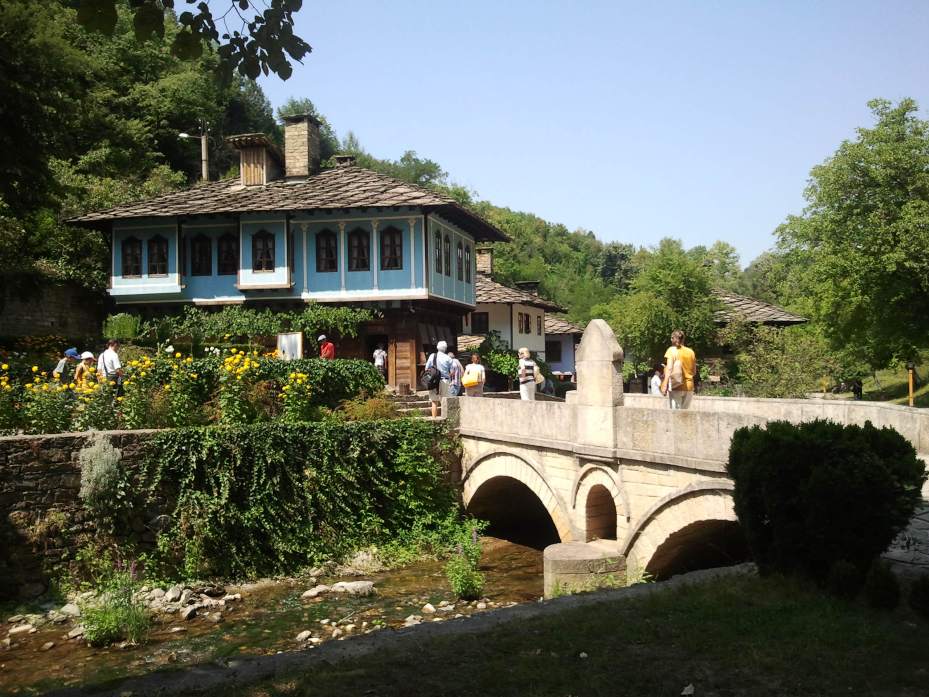
An absolute must for visitors of Gabrovo is the Ethnographic Open-Air Museum Etar, a complex of historically valuable old houses that were relocated from Gabrovo’s surrounding 50 years ago. Along a stone-paved street are historic workshops where craftsmen work like in the 19th century. I can especially recommend the coffee house and the grill specialties in a typical old Bulgarian restaurant which is part of the complex.

Also not to be missed is the nearby village and open-air museum Boschenzi and the woodcarving town of Tryavna with its historic houses that also date from the 19th century.

Etar

Etar near Gabrovo

Gabrovo ist eine bulgarische Stadt im Nordbalkan und liegt im Tal des Jantra, einem rechten Nebenfluss der Donau. Viele Söhne und Töchter der Stadt, einige von ihnen weltberühmt, wie der Land-art und Verpackungs-Künstler Christo Javacheff oder der Vater der ehemaligen Präsidentin Brasiliens Dilma Rousseff, haben ihre Wurzeln in Gabrovo. Ursprünglich ein Zentrum des Handwerks, entwickelte sich die Stadt in der ersten Hälfte des zwanzigsten Jahrhunderts mit dem Bau unzähliger Fabriken zu einem wichtigen Industrie- und Textilzentrum des Landes und wurde damals auch das “Bulgarische Manchester” genannt. Die geschäftige Tätigkeit dieser Zeit ist jedoch weitgehend verschwunden und einer gewissen Hoffnungslosigkeit gewichen. Obwohl ich einige positive Entwicklungen gesehen habe, schien mir, dass der “Westen” und “Europa” Gabrovo seit der politischen Wende der neunziger Jahre komplett vergessen hatten. Die Bevölkerung der Stadt ist in den letzten dreißig Jahren stetig zurückgegangen und viele der ehemaligen Fabrikgebäude sind zu unverkäuflichen Industrieruinen verkommen. Dennoch ist der Humor der Menschen geblieben und wird gelebt. Jedes Jahr findet das landesweit bekannte Festival für Humor und Satire in Gabrovo statt.

Für mich ist Gabrovo aus folgenden Gründen eine Reise wert:

In Gabrovo gibt es ein paar sehenswerte Museen, Kirchen und Theater. 

Die Industrieruinen dieser Stadt waren für mich eine lehrreiche Lektion, stumme Zeugen und Beweis für die gescheiterte sozialistische Zentralwirtschaft der Kommunisten.

Etar near Gabrovo

Etar near Gabrovo

Ein absolutes Muss für jeden Besucher der Stadt ist das Ethnographische Freilichtmuseum Etar, ein Komplex von historisch wertvollen alten Häusern, die vor 50 Jahren aus der Umgebung Gabrovos umgesiedelt wurden. Entlang einer gepflasterten Straße befinden sich historische Werkstätten, in denen Handwerker wie im 19. Jahrhundert arbeiten. Ich kann das Kaffeehaus und die Grillspezialitäten in einem typisch bulgarischen Restaurant des Komplexes besonders empfehlen.

Nicht zu versäumen sind auch das nahe gelegene Dorf und Freilichtmuseum Boschenzi und die Holzschnitzerstadt Tryavna mit ihren historischen Häusern, die ebenfalls aus dem 19. Jahrhundert stammen.

Categories: Blogroll, Bulgarien, History, Museum, Travel | Tags: , , , , | 10 Comments

Discover Bulgarian Wines

Bulgaria Wine Tours organizes full-service wine tours to Bulgaria but there is much more to it than simply tasting wines. The tours combine wine tastings and winery visits with the cultural heritage, history, cuisine and nature of Bulgaria. They like to call themselves a tour operator that focuses on wine & food tourism with a touch of cultural and rural tourism. You do not have to be a wine connoisseur to enjoy their tours. Bulgaria Wine Tours are enjoyable and accessible to anyone who prefers vacations with a heavy focus on wine, food and culture. For those who are wine connoisseurs or would like to organize a tour for a wine club or a group of wine professionals, they take great pride on offering special interest tours that focus exclusively on wine and food. Get in touch for a customized tour itinerary that fits all of your needs.

Bulgaria Wine Tours offers guided private or group tours in Bulgaria’s wine regions.

Contact Bulgaria Wine Tours

Dear Travelers, in order to to get in touch with Bulgaria Wine Tours, please write them an E-Mail: info@bulgariawinetours.com or contact Bulgarian Wine Tours through their website: http://www.bulgariawinetours.com

Post written in co-operation with Bulgaria Wine Tours

Bei Bulgarian Wine Tours organisieren wir Full-Service-Wein-Touren nach Bulgarien, aber es gibt viel mehr als nur Weine zu probieren. Die Touren verbinden Weinproben und Weingüterbesuche mit dem kulturellen Erbe, Geschichte, Küche und der Natur Bulgariens. Sie nennen uns gerne einen Reiseveranstalter, der sich auf den Wein- und Lebensmittel-Tourismus mit einem Hauch von Kultur- und Landtourismus konzentriert. Sie müssen kein Weinkenner sein, um die Touren von Bulgarian Wine Tours zu genießen. Die Touren sind angenehm und zugänglich für jeden, der Urlaub mit einem starken Fokus auf Wein, Essen und Kultur bevorzugt. Für diejenigen, die Weinkenner sind oder eine Tour für einen Weinclub oder eine Gruppe von Weinprofis organisieren möchten, ist Bulgaria Wine Tours gerne bereit, spezielle Interessen-Touren anzubieten, die sich ausschließlich auf Wein und Essen konzentrieren. Kontaktieren Sie Bulgaria Wine Tours für eine maßgeschneiderte Reiseroute, die all Ihren Bedürfnissen entspricht.

Bulgarian Wine Tours bietet geführte private oder Gruppenreisen in Bulgariens Weinregionen an.

150FD7A3-4E30-4634-AB81-A8E7A2909C91

Kontakt Bulgaria Wine Tours

Liebe Reisende, um mit Bulgaria Wine Tours in Kontakt zu treten, schreiben Ihnen  bitte ein E-Mail: info@bulgariawinetours.com oder kontaktieren Sie Bulgaria Wine Tours über ihre Website: http://www.bulgariawinetours.com

Artikel geschrieben in Zusammenarbeit mit Bulgaria Wine Tours


Categories: Blogroll, Bulgarien, Events, Food, Nature, Restaurant, Travel | Tags: , , , | 6 Comments

Excellent wines produced by the Winery Estate Dragomir in Plovdiv, Bulgaria

My visit to the winery Dragomir in Plovdiv was a very special treat! I was invited by friends to taste and enjoy the different top wines of this relatively young winery. Honestly, I love good wine, but I would not call me a wine connoisseur or even „sommelier” 🙂 Anyway, I allow myself a judgment here. All savored Dragomir wines have tasted exceptionally well. The wines were just outstanding and I’m already looking forward to my next trip to Plovdiv! Interested in an excellent and exclusive wine from Bulgaria? Here is the link to the winery Dragomir!

Dragomir Winery Estate, Plovdiv

Dragomir Winery Estate, Plovdiv

By the way, did you know that the city of Plovdiv, together with the South-Italian town Matera, has been nominated cultural Capital of Europe for the year 2019.

Plovdiv, located in the Thracian Plain, with its “only” 350,000 inhabitants, is the second largest city of Bulgaria. The city, also known for its university, is located southeast of Sofia and can be reached by car in just under two hours. Train and bus lines, as well as a small airport, connect the world with Plovdiv which is one of the most important centers of the country for industry, trade and tourism. It was no coincidence that Bulgaria’s “Sleeping Beauty”, the city of Plovdiv, was named European Capital of Culture for this year. As you approach the city by car, you are crossing quarters with the same prefabricated buildings and houses as in many other socialist towns elsewhere. In the heart of Plovdiv, however, visitors will discover one of Europe’s oldest cities. Plovdiv, or Phillipopolis, was once the most beautiful city in Thrace. Today, it is also known as the “Bulgarian Rome”. When you stroll through the streets and alleyways of the Old Town, past the magnificent patrician houses from the time of the Bulgarian Renaissance, you will travel back in time through the history of Bulgaria. The Roman theater, the ancient stadium, the tombs, the third oldest mosque in the Balkans, the Archaeological Museum, and much more testify to a great past of this beautiful town.

Old town Plovdiw

Old town Plovdiw

Mein Besuch des Weinguts Dragomir in Plovdiv war ein ganz besonders Genusserlebnis! Unter dem Motto Degustieren und Geniessen durfte ich die verschieden Top-Weine dieses noch relativ jungen Weinguts verkosten. Freunde haben mich dazu eingeladen. Ganz ehrlich, ich liebe guten Wein, würde mich aber nicht als Weinkenner oder „Sommelier“ bezeichnen 🙂 Trotzdem erlaube ich mir hier ein Urteil. Alle von mir degustierten Linien der Dragomir Weine haben mir aussergewöhnlich gut gemundet. Die Weine waren schlicht hervorragend und ich freue mich jetzt schon auf meine nächste Reise nach Plovdiv! Interesse an einem Exklusiven Wein aus Bulgarien? Hier der Link zum Dragomir Weingut!

Dragomir Winery Estate Plovdiv

Dragomir Winery Estate, Plovdiv

Übrigens wusstest Du, dass die Stadt Plovdiv zusammen mit der süd-italienischen Stadt Matera für das Jahr 2019 zur Kulturhauptstadt Europas ernannt wurde?

Plovdiv, gelegen in der Thrakischen Ebene, ist mit seinen „nur“ 350’000 Einwohner die zweitgrösste Stadt von Bulgarian und ist für das Jahr 2019 neben Matera in Italien eine der beiden Kulturhauptstädte Europas. Die Stadt, auch bekannt für seine Universität, liegt südöstlich von Sofia und ist mit dem Auto in nur knapp zwei Stunden zu erreichen. Zug- und Buslinien sowie ein kleiner Flughafen verbinden die Welt mit Plovdiv, einem der wichtigsten Zentren des Landes für Industrie, Handel und Tourismus. Nicht umsonst wurde Bulgariens „schlafende Schönheit“, die Stadt Plovdiv zur diesjährigen Kulturhauptstadt Europas gekürt. Wenn man sich mit dem Auto der Stadt nähert, durchquert man Quartiere mit denselben Plattenbauten und Gebäuden wie in vielen anderen sozialistischen Einheitsstädten anderswo. Jedoch im Herzen der Stadt eröffnet sich den Besuchern eine der ältesten Städte Europas. Plovdiv oder auch Phillipopolis war einst die schönste Stadt Thrakiens und gilt heute auch als das „bulgarisches Rom“. Wer durch die Strassen und Gassen der Altstadt schlendert, vorbei an den prächtigen Bürgerhäuser aus der Zeit der bulgarischen Renaissance, unternimmt eine Zeitreise durch die Geschichte Bulgariens. Das römische Theater, das antike Stadion, die Grabstätten, die drittälteste Moschee des Balkans, das Archäologische Museum, und vieles mehr zeugen von einer grossen Vergangenheit dieser wunderschönen Stadt.

Categories: Blogroll, Bulgarien, Events, Food, Landmark, Travel, Wine | Tags: , | Leave a comment

Blog at WordPress.com.